

Introduction
When we think of intelligent animals, our minds often drift to other species, such as bottlenose dolphins, great apes, and crows. But a new contender is stealing the spotlight—the mighty elephant!
Join Easy Travel on this fascinating journey into the world of pachyderm intelligence as we unravel real-life instances from both the wild and captivity. From problem-solving skills to social complexity, we’ll explore all the remarkable facets of elephant intelligence and discover the true brilliance of these gentle giants!
What Makes Elephant Intelligence Unique?
At the core of the elephant’s intelligence lies its intricate anatomy. With the most giant brain of any land animal, elephants boast remarkable cognitive capacities. Weighing around 5 kilograms (11 pounds), the elephant brain and structure houses billions of neurons, including about 3,000 spindle neurons.
Recent scientific studies have demonstrated elephant self-awareness, including their ability to recognize themselves in mirrors, suggesting a higher cognitive ability. These specialized cells are crucial for complex social and emotional processing, supporting the elephant’s advanced social behaviors, memory, and problem-solving abilities.
Interestingly, the structure of an elephant’s brain, particularly its temporal lobes, bears striking similarities to that of humans. These regions are associated with highly complex behaviors such as memory, problem-solving, and emotional processing.
Elephants also possess a well-developed hippocampus, crucial for spatial memory and navigation across their vast habitats. This allows them to navigate complex social structures and thrive in diverse environments.
Social Behaviours
Beyond their large brain size, elephants’ social lives also play a pivotal role in shaping their intelligence. Complex and multi-tiered social structures characterize elephant society, emphasizing group dynamics and relationships within herds.
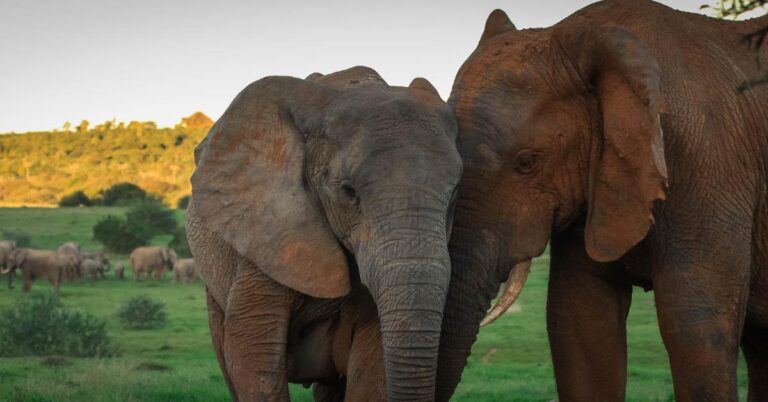
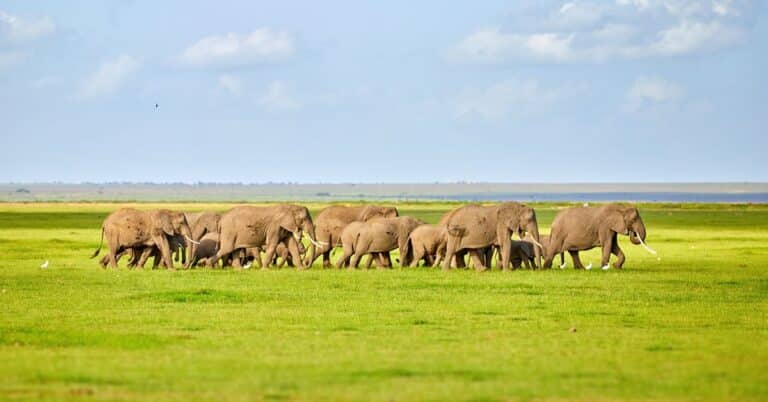
Living in tight-knit family units led by matriarchs, elephants engage in sophisticated social behaviors, including communication through vocal sounds, body language, and tactile interactions. Elephants demonstrate empathy, altruism, and even mourning rituals, indicating a deep emotional and social intelligence.
Their ability to form enduring social bonds and cooperate underscores their advanced social cognition, akin to that observed in primates. Elephants are renowned for their remarkable long-term memory, particularly when recognizing their family members.
A heartwarming example was seen at an elephant sanctuary in Tennessee, where two Asian elephants, Shirley (53) and Jenny (30), were reunited after an astonishing 23 years apart. The greeting they shared upon reuniting indicated that they remembered each other from their circus days when Shirley was about 30 years old and Jenny was just a calf.
Their joyful reunion at the sanctuary vividly demonstrated the depth of their shared history and the enduring nature of their relationship. In another touching case, an experiment conducted at Amboseli National Park by Karen McComb revealed elephants’ profound connection with their departed loved ones.
She played the call of a 15-year-old female elephant who had passed away to her family 23 months after her death. Remarkably, the family responded by contact calling and approaching the loudspeaker, showcasing their deep understanding and emotional attachment, even beyond death.
Social Memory
In Amboseli, researchers found that African elephant families led by younger matriarchs often seek the company of those led by older ones. Why? The older matriarchs are a treasure trove of information, holding the secrets to essential resources like watering holes and seasonal food spots.
Upon maturity, male elephants transition from cow herds to bull herds, forming looser and temporary associations with other males. Their social dynamics emphasize dominance and size, with communication pivotal in their hierarchy.
Their knowledge helps the entire group adapt and survive tough times, reducing the chances of anyone going hungry. Regarding survival skills, let’s consider desert elephants in Namibia and Mali. These guys have huge home ranges because water is scarce.
During a significant drought in 1981, many animals in their area died of starvation. But the radio-collared elephants, with their clever memory of distant water holes, managed to expand their travels through large distances and keep everyone fed, showing just how valuable their ecological know-how can be.
And that’s not all! These intelligent elephants aren’t just blessed with exceptionally long memories and skilled tool users.
Can Elephants Use Tools?
Researchers visited Kandula’s home at the National Zoo in Washington, D.C. To test Kandula’s cognitive ability, they placed sticks and sturdy cubes around the yard, then strung a pulley system similar to a laundry line between the roof of the elephant’s house and a tree.
From this cable, they dangled fruit tipped with bamboo branches of various lengths both within and outside Kandula’s reach. With the bait set, they retreated out of sight, turned on the camera, and began the long wait.
As the researchers waited with bated breath, they observed Kandula approach the suspended fruit with keen interest. During the initial six sessions, he showed no interest in obtaining the food rewards. However, in the seventh session, something remarkable happened. He rolled the cube from the middle of the yard to a spot beneath the suspended treat, then cleverly stood on the cube to grab the prize with his trunk.
Later, he took matters into his own “hands” and rolled the cube about 15 meters down a hill to reach flower blossoms hanging from a tree. Even more impressive, he showed how to use other objects, like a tire or a large ball, to achieve food when the cube wasn’t available. It’s like he’s saying, “I got this!”
But let’s delve more deeply: how exactly do these majestic creatures collaborate and work together?
Elephants Working Together in Elephant Society
Tests of elephant intelligence and other abilities are rare due to the risks involved in working with these large animals. Elephants are aware of and interact with other elephants within their social networks, highlighting the complex social structures and relationships within elephant herds. However, Plotnik and colleagues rose to the challenge by adapting a classic 1930s experiment used on primates.
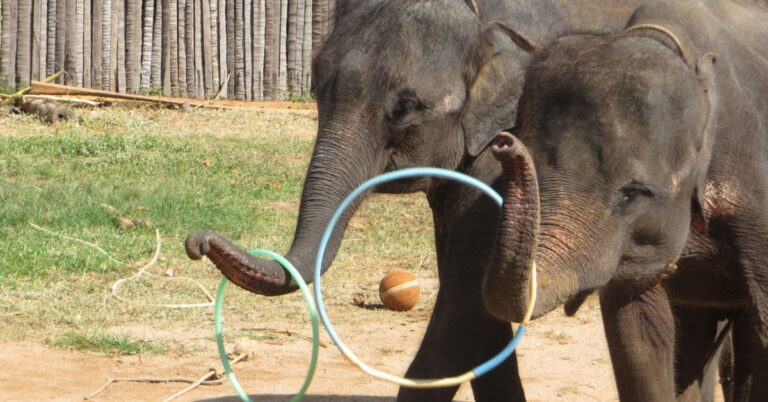
In this experiment, elephants at the Thai Elephant Conservation Center in Lampang, Thailand, were tasked with pulling on ropes to move a sliding table holding bowls of corn. They quickly learned teamwork was necessary to succeed, waiting patiently for their “partner” to arrive before attempting the task.
In most cases, the elephants succeeded in getting the corn, showcasing their impressive problem-solving skills and cooperation. In a delightful twist, two elephants, Neua Un and JoJo, managed to outsmart the researchers.
Later, he took matters into his own “hands” and rolled the cube about 15 meters down a hill to reach flower blossoms hanging from a tree. Even more impressive, he showed how to use other objects, like a tire or a large ball, to achieve food when the cube wasn’t available. It’s like he’s saying, “I got this!”
As for the other “cheater,” JoJo took a different approach. He didn’t bother approaching the volleyball net unless his partner, Wanalee, was released—a clever tactic.
We’ve covered plenty of cases highlighting elephant intelligence, but there’s more to explore! By examining instances of elephant intelligence in both captivity and the wild, we can gain a deeper understanding of how their cleverness extends to their surroundings, aiding in their adaptability.
Other Cases of Elephant Intelligence
Elephants in the wild Researchers have witnessed elephants demonstrating remarkable problem-solving abilities; one such case was during a severe drought in the Amboseli National Park of Kenya.
Facing water scarcity, the African elephants collaborated to dig deep wells in dry riverbeds, unearthing precious water reserves to sustain themselves and other wildlife. Elephants exhibit deep social bonds, complex communication, and an understanding of mortality within their species.
Furthermore, elephants exhibit sentimental responses to the deaths of their companions, displaying what seems like grief and sorrow. They show this by gently touching the lifeless body with their trunks and lingering by their friend’s side for long periods as if paying their respects.
Sometimes, they may even try to give their departed friend a proper farewell by covering them with mud and branches, showcasing a profound sense of care and farewell in their unique way. It’s a poignant reminder of elephant communities’ deep emotional bonds and compassion.
Captive Elephants
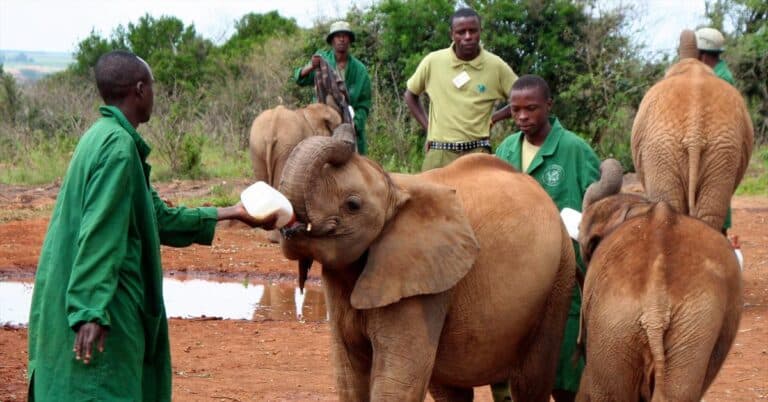
In captive settings, elephants have also exhibited remarkable intelligence and emotional sensitivity. At the Elephant Sanctuary in Tennessee, USA, an Asian elephant named Tarra formed an unlikely friendship with a stray dog named Bella.
Despite their differences in size and species, Tarra and Bella developed a deep bond, displaying acts of empathy, communication, and companionship that transcended their biological differences. This heartwarming tale illustrates captive elephants’ complex social dynamics and emotional depth.
Similarly, in Thailand’s Elephant Nature Park, Asian elephants rescued from abusive industries have showcased remarkable cognitive abilities and emotional resilience. Through positive reinforcement training and compassionate care, these Asian elephants have thrived in their sanctuary environment, demonstrating behaviors indicative of trust, problem-solving, and social bonding.
Their transformative journey from exploitation to empowerment is a testament to the intelligence and emotional complexity of elephants in captivity.
Conclusion
The evidence is clear: elephants are undeniably brilliant beings with complex brains and intricate social lives. Their astonishing problem-solving abilities and profound emotional depth will continue to captivate and inspire us.
As we strive to protect these majestic creatures and conserve their habitats, let us celebrate their brilliance and recognize the importance of preserving their place in the natural world. And what better way to witness the marvels of elephant intelligence than by experiencing it firsthand in Tanzania with Easy Travel?
Join us on an unforgettable Ele-fantastic safari adventure in the renowned “Elephants Playground” of Tarangire National Park!
Frequently Asked Questions (FAQs)
1. Are elephants considered intelligent animals?
Yes, elephants are widely regarded as one of the most intelligent species on the planet. Their intelligence is comparable to great apes, dolphins, and even humans in certain areas.
Elephants have large and highly developed brains, contributing to their exceptional cognitive abilities. They display complex social behaviors, problem-solving skills, and remarkable memory. Their intelligence is evident in their ability to understand human commands, use tools, and exhibit emotions such as empathy, grief, and joy.
2. How do elephants demonstrate problem-solving skills?
Elephants are known for their ability to solve complex problems in the wild and in captivity. In the wild, they have been observed manipulating their environment to achieve desired outcomes, such as using branches to swat flies or creating makeshift bridges to cross rivers.
In captivity, elephants have demonstrated the ability to complete puzzles and tasks that require advanced thinking. They can figure out how to reach food that is out of their immediate grasp, and they have been known to work together to achieve common goals, showcasing their cooperative problem-solving abilities.
3. Do elephants have self-awareness?
Yes, elephants possess a high level of self-awareness. One of the most compelling pieces of evidence is their ability to recognize themselves in a mirror, a rare animal trait. This self-recognition is often tested through the “mirror test,” where animals are exposed to their reflection with a mark placed on the part of their body they can’t usually see.
Elephants have passed this test, indicating a sense of self. This self-awareness is also linked to their complex emotions and social behaviors, as they can distinguish between themselves and others in their social group.
4. How do elephants communicate with each
Elephants have a sophisticated communication system that includes vocalizations, body language, and seismic signals. They use low-frequency rumbles, trumpets, and other vocalizations to convey long-range messages. These sounds can communicate various emotions, intentions, and even specific information, such as warnings about predators or the location of water sources.
Elephants also use their trunks, ears, and body posture to express their emotions and social status. Additionally, they can detect vibrations through the ground, which allows them to communicate over vast distances, especially when vocal sounds may not travel as effectively.
5. Do elephants have good memories?
Elephants are famous for their excellent memories, crucial for survival in the wild. They can remember the locations of water sources, migration routes, and even specific individuals for many years. This memory helps them navigate harsh environments and maintain social bonds within their herds.
For instance, matriarchs who lead elephant herds rely on their memory to guide their group to resources during drought or scarcity. Their ability to remember past experiences also affects their social interactions, as they can recognize allies and differentiate them from potential threats.
6. Can elephants understand human gestures and commands?
Yes, elephants have demonstrated the ability to understand and respond to human gestures and commands, even without prior training. Research has shown that elephants can follow human pointing gestures to locate hidden food, indicating that they can interpret the intentions behind these gestures.
In environments where elephants and humans interact closely, such as conservation areas or sanctuaries, elephants can learn and respond to specific vocal commands. This understanding of human communication suggests a high level of cognitive processing and the ability to cross the species’ communication barrier.
7. How do elephants exhibit empathy?
Elephants are known for their deep empathy, which they display through various behaviors. They are highly social creatures and form strong bonds with their family members and other herd members.
When an elephant is distressed, others in the group will often come to comfort them, using their trunks to touch and caress the upset individual. Elephants have also been observed assisting injured or sick companions and mourning a herd member’s loss. This empathetic behavior is not only directed toward their species; elephants have also shown concern for other animals, including humans.
8. What is the role of the elephant’s brain in its intelligence?
The elephant’s brain is one of the largest among land animals, weighing about 5 kilograms (11 pounds), and is highly developed, particularly in areas associated with memory, emotion, and social interaction. The cerebral cortex, responsible for processing information, is highly convoluted in elephants, providing them with advanced cognitive abilities.
Elephants’ large and complex brains allow them to process a wide range of information, make decisions, and exhibit behaviors indicative of high intelligence. These include their ability to navigate complex social structures, learn new skills, and adapt to changing environments.
9. Do elephants show mourning behavior?
Yes, elephants are one of the few species observed engaging in behaviors resembling mourning. When a member of their herd dies, elephants often display signs of grief, such as staying near the body for extended periods, touching it gently with their trunks, and even covering it with leaves or dirt.
Elephants’ large and complex brains allow them to process a wide range of information, make decisions, and exhibit behaviors indicative of high intelligence. These include their ability to navigate complex social structures, learn new skills, and adapt to changing environments.
10. How do elephants use tools?
Elephants can use tools to solve problems, a sign of their intelligence. They have been observed using sticks to scratch themselves or as fly swatters, and they can modify branches or leaves to suit their needs.
In some cases, elephants have used logs or rocks to dislodge barriers, allowing them to access food or water. Their ability to use and even create tools demonstrates their understanding of cause and effect and their capacity for innovative thinking.
Tool use in elephants is often learned and passed down through generations, indicating cultural transmission of knowledge.
11. Do elephants engage in play?
Elephants engage in play, an essential aspect of their social and cognitive development. Young elephants are exceptionally playful, often engaging in mock fights, chasing each other, or playing with objects in their environment.
Play is not only a way for them to bond with other members of the herd but also helps them develop physical skills and social behaviors crucial in adulthood. Even adult elephants engage in playful activities, such as splashing in water or playing with calves, suggesting that play serves developmental and emotional purposes.
12. Can elephants remember individuals after long periods?
Elephants have exceptional long-term memory and can remember individuals they encountered many years ago. This ability is essential for maintaining social bonds within their herds, often spread over large areas.
Elephants can recognize and remember other elephants by their scent, voice, and appearance and differentiate between familiar and unfamiliar individuals. This memory also extends to humans; elephants have been known to remember people who have treated them kindly—or poorly—even after many years of separation.
13. Can elephants remember individuals after long periods?
Elephants exhibit behaviors that can be considered cultural, as they vary between different populations and are passed down through generations. For example, certain groups of endangered elephant species have unique methods for accessing food, using specific tools, or finding water not observed in other groups.
Like human cultural practices, the group learns and shares these behaviors. The transmission of these behaviors from one elephant generation to the next indicates a form of cultural learning in which young elephants observe and mimic the actions of their elders.
14. How do elephants exhibit cultural behaviors?
Elephants exhibit behaviors that can be considered cultural, as they vary between different populations and are passed down through generations. For example, certain groups of endangered elephant species have unique methods for accessing food, using specific tools, or finding water not observed in other groups.
Like human cultural practices, the group learns and shares these behaviors. The transmission of these behaviors from one elephant generation to the next indicates a form of cultural learning in which young elephants observe and mimic the actions of their elders.
15. What are the ethical considerations in studying elephant intelligence?
Studying elephant intelligence raises critical ethical considerations, particularly regarding how these animals are treated in research and captivity. Given their high cognitive and emotional development level, it is crucial to ensure that elephants are not subjected to stressful or harmful conditions.
Research on wild elephants should be conducted to respect their natural behaviors and social structures. Additionally, understanding elephant intelligence has implications for conservation efforts, highlighting the importance of protecting these sentient beings and their habitats.
16. What are the implications of elephant intelligence for conservation?
Recognizing elephants as highly intelligent and emotionally complex animals has significant implications for conservation efforts. It emphasizes the need to protect their natural habitats and ensure their welfare in captivity.
Conservation strategies that consider their social structures, communication needs, and cognitive abilities are more likely to be successful. Moreover, understanding their intelligence can help develop better approaches to mitigating human-elephant conflicts and fostering more excellent public support for their protection.