

Introduction: The world’s largest land animal
Welcome to the wild world of elephants! I’m your host, and today, we’re delving deep into 20 fascinating facts about all the different types of elephant species.
These precious pachyderms are famous for their large size, more rounded ears, wrinkly skin, and gentle nature, but there’s much more to discover! Join Easy Travel and me as we uncover all there is to know about African elephants together.
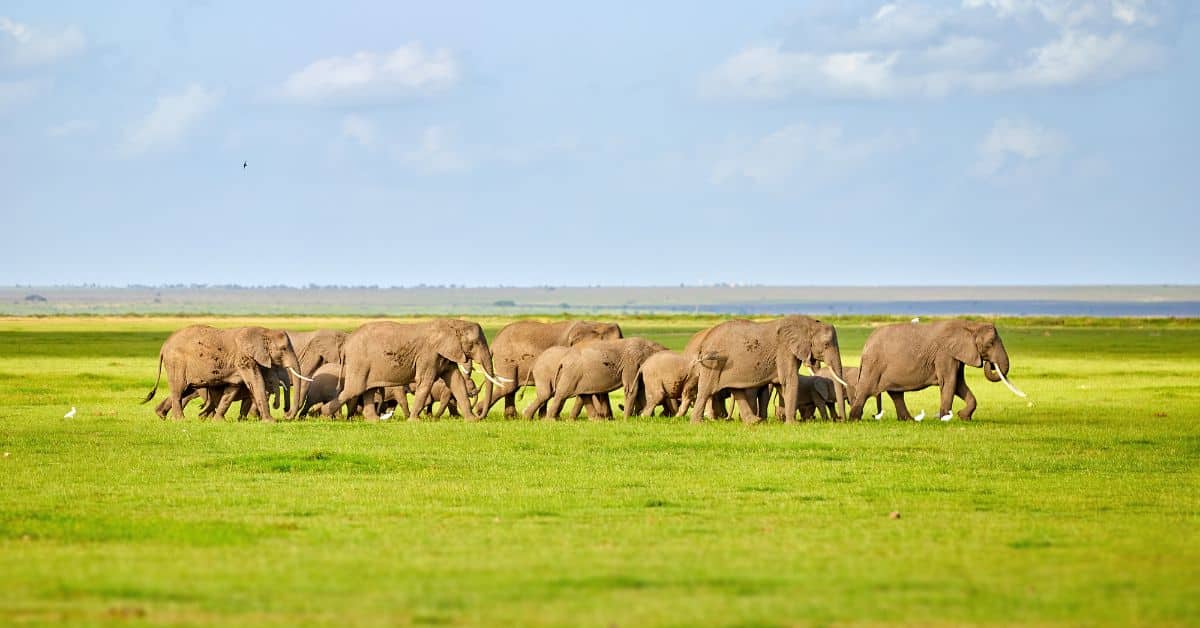
Elephants are led by a matriarch
The matriarch, or female leader, holds unparalleled influence within elephant families. Typically, the oldest and largest adult elephant creates a female.
Her wisdom and guidance profoundly shape the structure of the baby elephant family. The African Bush Elephant, the Savanna Elephant, is the largest living terrestrial animal and exemplifies this matriarchal system.
In elephant society, wisdom flows from the matriarch. Survival skills are passed down through generations, emphasizing the importance of youngsters spending time with older elephant family members, especially the matriarchs, to learn crucial life lessons.
African elephants (Loxodonta africana) are the only mammals best known for this matriarchal structure, where leadership is often inherited through the female line. In contrast to male elephants, Asian elephants (Elephas maximus) exhibit less hierarchical behavior, with less emphasis on age or gender dominance, as research suggests.
Elephants have personalities
If you’ve had the joy of owning a pet, you’ve likely discovered that each one possesses its unique personality. Each has unique and endearing quirks, from the energetic pup who bounds outside all day to the laid-back cat content to watch the world from the window.
Yet, when it comes to wild animals, we overlook this individuality, often pigeonholing them into stereotypes. Like us and our furry friends, elephants have distinct personalities.
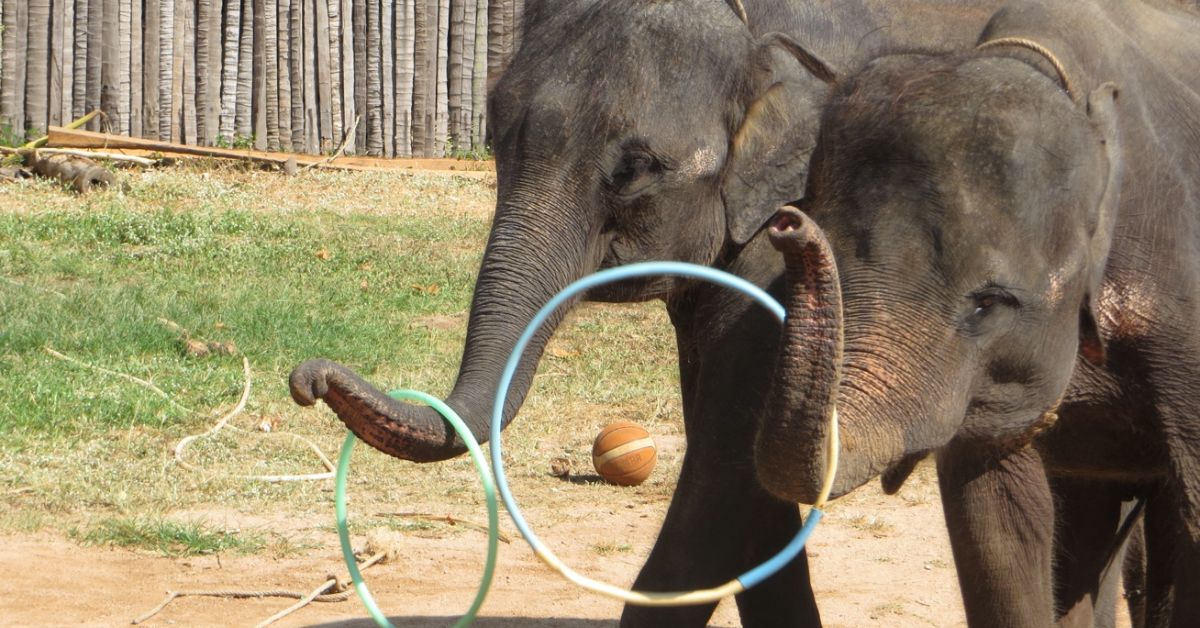
Research has shown that individual elephants exhibit unique traits and behaviors that can be categorized into different personality types. These traits include playfulness, curiosity, assertiveness, sociability, and more.
From playful antics to curious explorations, each elephant brings a unique flavor to the whole elephant population and the herd itself. These personalities shape how they navigate their world, interact with each other, and engage with us humans, fostering a profound sense of connection and empathy.
Elephants have emotions
Elephants are among Earth’s most intelligent animals—their nifty neocortices rival humans, great apes, and even some dolphins. Elephants demonstrate various behaviors associated with high brainpower, including selflessness, grief, mimicry, self-awareness, and using tools.
When elephant families lose a loved one, they don’t just move on—they show genuine signs of grief. It’s touching to see how they visit the bones of their departed family members, sometimes gently touching them with their trunks for years. And if a herd member passes away, they’ll stick around, offering comfort to each other for up to a week.
Your Elephant Adventure Awaits – Start Planning!
Elephants never forget
The memory of an elephant is genuinely remarkable. They can remember distant watering holes, other elephants, and even encounters with humans from many years ago. Even more astonishing is how elephants pass down this wealth of knowledge from one generation to the next, primarily through the wisdom of the matriarchs.
But here’s where it gets even more impressive: elephants can adjust their travel schedules to perfection, arriving just in time for the fruit they seek to be ripe. It’s like they have an internal calendar finely tuned to the rhythms of nature.
Elephants are a keystone species
African elephants play a critical role in their ecosystem, shaping their habitat in many ways. The African Forest Elephant and African Savanna Elephant populations have distinct roles in their habitats. Their tusks dig up dry riverbeds during the dry season, creating watering holes for many animals.
Their dung disperses seeds, aiding plant spread, and provides habitat for dung beetles. In forests, their browsing creates pathways for smaller animals, while in savannas, they uproot trees, promoting open landscapes for wildebeest and other animals to thrive.
Elephants cannot gallop
While horses and bull elephants can gracefully gallop with their long, flexible spines, they have different internal setups. Their shorter, sturdier spines and pillar-like limbs mean galloping isn’t in the cards for them.
Instead, elephants move in a distinctive gait known as a “fast walk” or a “running walk,” where they simultaneously lift and swing their legs in a coordinated manner, resulting in a fast yet steady pace. It’s their unique elephant strut, and it’s pretty awesome!
Elephants are excellent swimmers
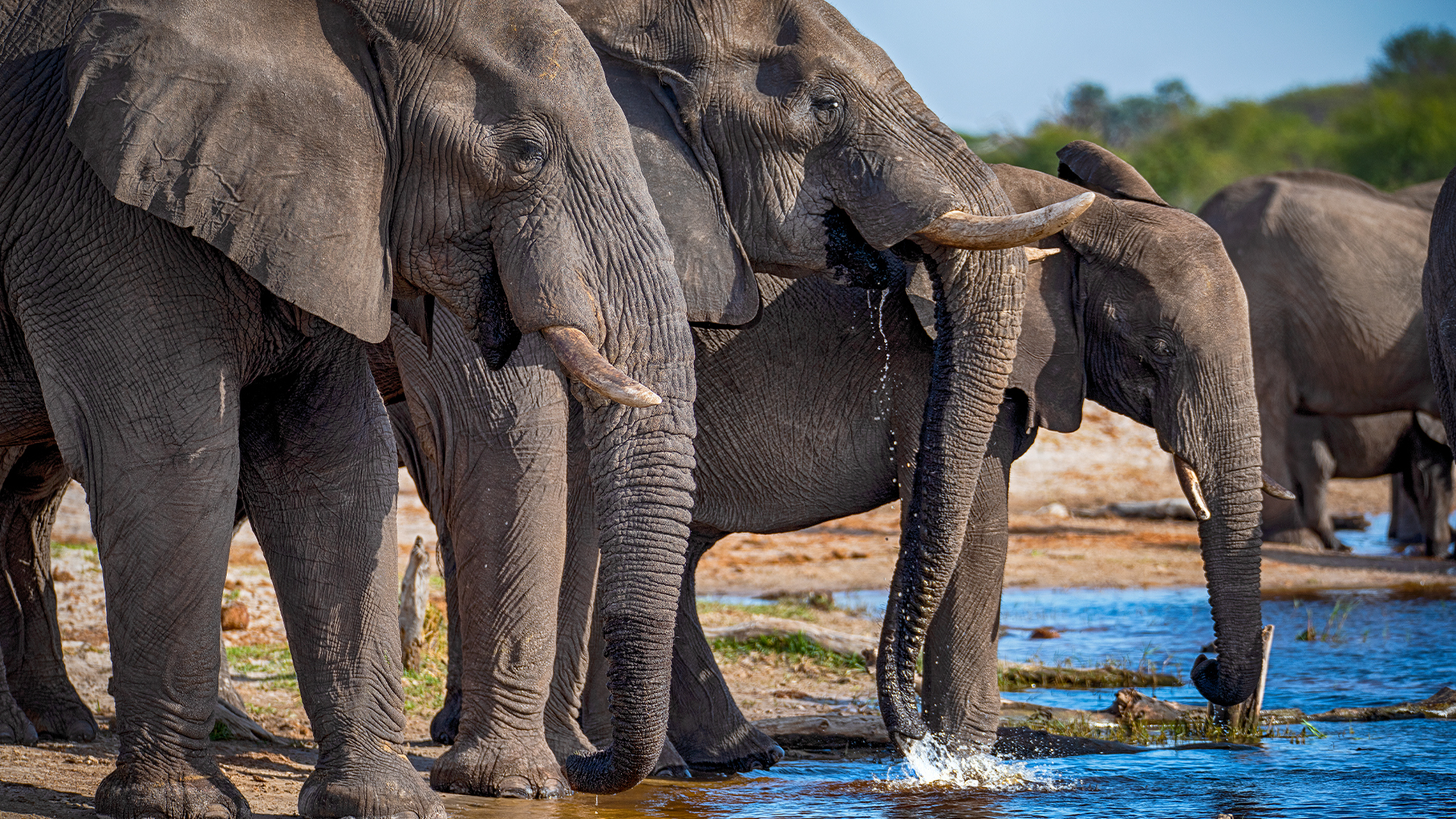
It might surprise some to learn that elephants are quite the water lovers! They adore splashing around, often showering themselves and their friends with sprays from their trunks.
But there’s more to it than just fun and games—swimming is a vital skill for these gentle giants. They sometimes need to traverse rivers and lakes in search of food, so navigating the water is a must.
Luckily, elephants are natural in the water department. With their impressive buoyancy, they effortlessly stay afloat at the surface, using their powerful legs to paddle through the water. When faced with deeper waters, elephants cleverly utilize their trunks as snorkels, allowing them to breathe while they glide through the depths.
Elephants bury their dead
Across many cultures, we put effort into burial rituals to honor life, reflecting our empathy and sentience. While animal burials are rare, recent reports suggest elephants may have similar behaviors.
They’ve been observed carrying the bodies of deceased infants and displaying changed behaviors near the carcasses of family members or others. Elephants do exhibit grief-like behaviors, investigating, sniffing, and touching dead bodies, sometimes even covering them with mud or palm fronds.
Baby elephants, for instance, show remarkable growth and adaptation, standing within 20 minutes and walking within an hour after birth. This suggests a form of mourning similar to humans.
Elephants are the only surviving member of their family
Elephants, the ultimate heavyweights of the animal kingdom, are the last survivors of the Elephantidae family, part of the ancient Proboscidea order. Proboscideans were a diverse and widespread group of herbivores that first appeared in Africa about 60 million years ago.
Unlike the three critically endangered species of elephants we know today, not all proboscideans were giants, nor did they look anything like their cousins. Some were pint-sized, like the cute little Eritherium from Morocco, who was as small as a fox and didn’t even have a trunk!
Elephants are the only surviving member of their elephant species
Elephants, the world’s largest land animals, aren’t just big listeners—they’re masters of long-distance communication. Their repertoire includes a range of sounds from snorts to roars, but their specialty lies in low-frequency rumbles, which they can send over vast, long distances together.
Biologist Caitlin O’Connell-Rodwell discovered that these rumblings and foot-stomping create seismic vibrations that elephants can detect through the ground. They’re tuned in to these infrasonic messages with enlarged ear bones and sensitive nerve endings in their feet and trunks. This unique ability helps them survive by warning others of danger nearby or miles away and keeping far-flung family members connected.
Elephants use their trunk’s vibrations to speak
Just like we have our favorite hands, elephants have their preferred tusks, too! You can spot which one they choose to use by looking at its smaller size and wear and tear.
Elephants communicate using various methods, including vocalizations, body language, and vibrations transmitted via their feet. These tusks are crucial for multiple tasks, including gathering food, lifting objects, stripping tree bark, digging holes, and self-defense, highlighting their vital role in an elephant’s daily life.
Elephants cannot jump!
Despite what you’ve seen in cartoons, elephants can’t jump. While other bouncy critters like kangaroos and monkeys hop around to dodge predators, elephants protect themselves differently, primarily relying on their massive size and tight-knit social circles.
Plus, let’s be honest, getting four tons of fluff off the ground in one go? That’s a tall order! It’s all in the bones—unlike most animals, elephant legs don’t have the spring needed for a giant leap.
Just like we have our favorite hands, elephants have their preferred tusks, too! Only male Asian elephants grow tusks, while female Asian elephants do not elephant tusks.
Elephants can distinguish human language
In Amboseli National Park, Kenya, researchers found that elephants react differently depending on the voices they hear. When the voices of groups known to pose a threat were played, elephants responded defensively by huddling together and investigating the scent.
Interestingly, they were most alert to the voices of adult males. This highlights the elephants’ deep understanding of human communication and showcases their intelligence and adaptability.
Elephants can suffer from PTSD
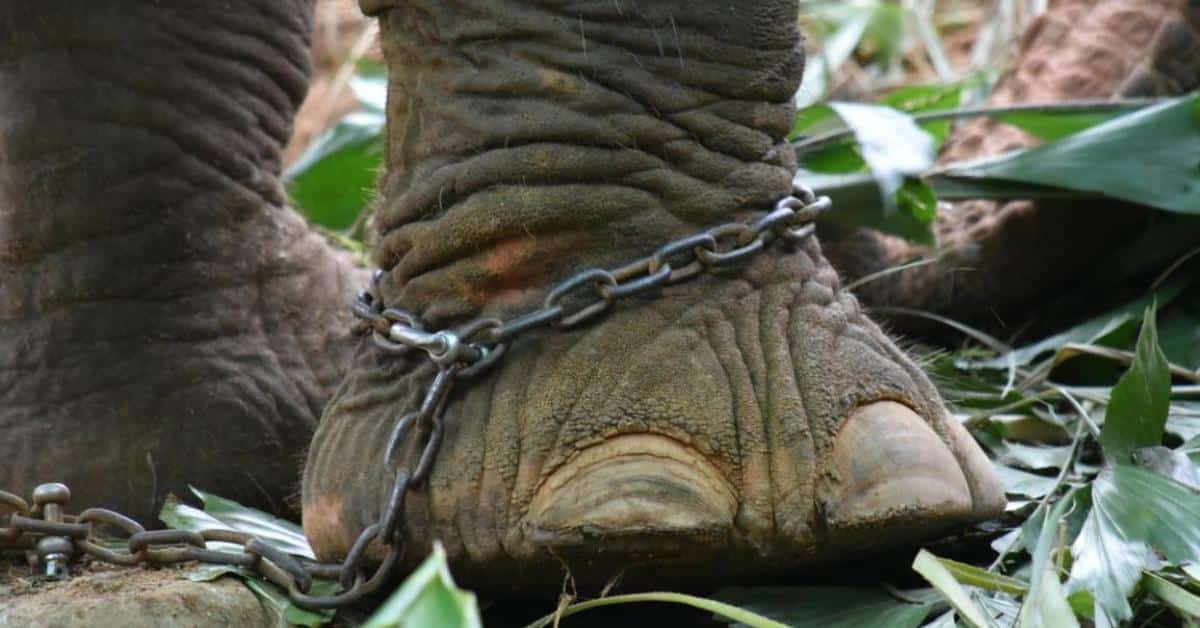
Elephants, known for their sensitivity and deep family bonds, can suffer lasting emotional scars from traumatic experiences. Witnessing the loss of a family member to poaching can lead to symptoms resembling post-traumatic stress disorder (PTSD). Similarly, elephants rescued from abusive situations may continue to show signs of PTSD long after finding refuge in a sanctuary.
These traumas affect their emotional well-being and impair their learning. The loss of select individuals in culls or poaching incidents deprives young elephants of crucial social knowledge passed down by their elders.
Elephants use dirt and mud as sunscreen
Ever wonder why elephants love to roll around in the dirt? Well, it’s not just for fun! Despite their rugged appearance, elephants have sensitive skin that can get sunburned.
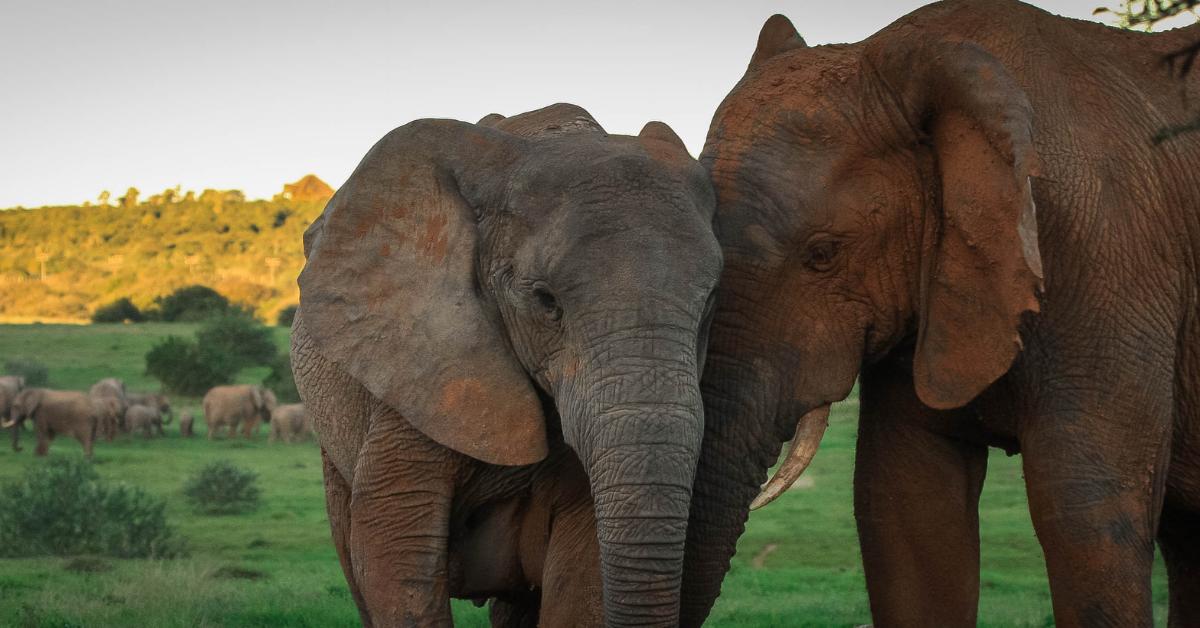
So, to shield themselves from the harsh rays, they cleverly throw mud, sand, or dust all over their bodies. And it’s not just for themselves—adult elephants even give the youngsters a helping trunk by dusting them, too! After a refreshing river bath, you might catch them slathering on a mud mask for extra protection.
Elephants have a highly developed sense of smell
Elephants boast an incredible sense of smell, detecting water sources up to 19.2 km (12 mi.) away. Their keen olfactory system is located at the tip of the elephant’s trunk, where scents enter and travel through seven olfactory bones called turbinals. These structures are equipped with millions of olfactory receptor cells, aiding elephants in tracking, memory, and navigating their surroundings with remarkable precision.
Elephants have a slow reproduction rate
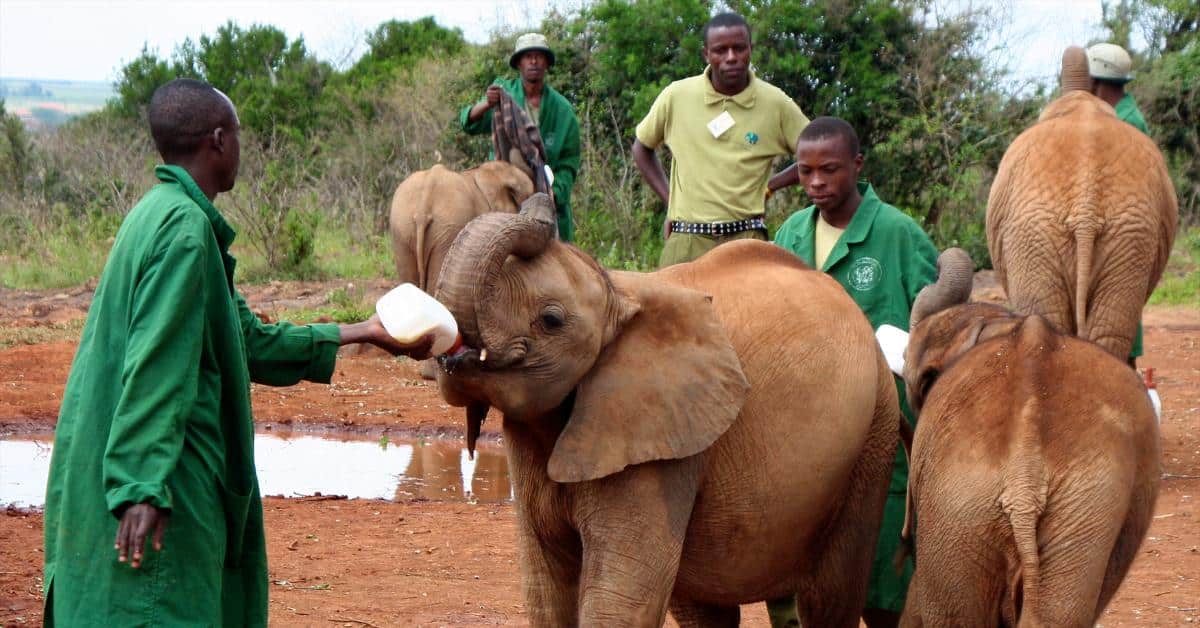
Elephant pregnancies last around 660 days or about 22 months. Once born, calves mature slowly and depend on their mother’s milk for over two years. Calves rely entirely on their mothers for survival and growth for the first three months.
They start feeding independently after three months but don’t consume significant amounts until around two years old. Although they can be fully weaned by age three, many calves continue to suckle for more extended periods.
Turn Your Dream Safari into Reality – Talk to Us!
Elephants are related to the Rock Hyrax
You wouldn’t guess it by size alone, but elephants have some surprising relatives! One surprising relative is the rock hyrax, a pint-sized herbivore from Africa and the Middle East. It is the elephant’s closest living kin.
Despite its small stature, rounded ears, and rodent-like appearance, this furry critter shares a family tree with the mighty elephant. Elephants also have ties to manatees and dugongs, marine mammals that share their distant ancestry. It just goes to show that family comes in all shapes and sizes!
Elephants can recognize themselves
The mirror test is a classic measure of self-awareness in animals. Initially, all species react similarly, inspecting the mirror and checking behind it. However, self-aware animals conduct repetitive tests like touching their faces to see if the reflection mimics them.
Elephants showed increased interest over time, investigating with their trunks when introduced to mirrors. Eventually, their curiosity waned, and they ceased interacting.
Unlike humans or some species, elephants didn’t attempt social interaction with their reflections, engaging in activities like eating that they typically avoid in front of others. This suggests a nuanced understanding of their reflection rather than mistaking it for another elephant’s behavior.
Elephants are endangered
Elephants worldwide face severe risks to their survival. With Asian elephants classified as endangered and African elephants as vulnerable, the pressure is on to protect these majestic creatures.
Their habitats are shrinking due to deforestation and human development, leading to conflicts with farmers and other communities. Wild elephants consume up to 300 pounds of food and 50 gallons of water daily, foraging for various vegetation depending on their habitat and the season.
Sadly, these conflicts sometimes result in the killing of elephants in retaliation. The situation is particularly dire for Asian elephants, who struggle to coexist in densely populated areas.
Conclusion
Elephants are truly remarkable creatures, boasting a wealth of fascinating traits. Whether it’s detecting distant sounds or recognizing themselves in a mirror, their intelligence shines through. And what better way to appreciate these majestic beings than by visiting them in their natural habitat?
World Elephant Day, celebrated on August 12, is a significant occasion dedicated to elephant conservation, raising awareness about the endangered status of elephants and promoting conservation efforts. Guests can embark on an unforgettable journey with Easy Travel to Tanzania, where they can witness elephants in all their glory and much more across the open plains tropical forests of Serengeti National Park.
So, pack your bags and prepare for the adventure of a lifetime, courtesy of our gentle giants!