


Introduction
We’ve all heard the age-old saying that an elephant never forgets, but how clever are these marvellous minds? Do elephants have a knack for understanding human language?
Come along with Easy Travel and me as we delve into the delightful world of pachyderm perception. Together, we’ll peel back the layers of mystery and debunk the myths surrounding elephant cognition.
But before we dive in, let’s explore how elephants communicate with one another and showcase their advanced thinking skill.
Cracking the code on African elephant communication.
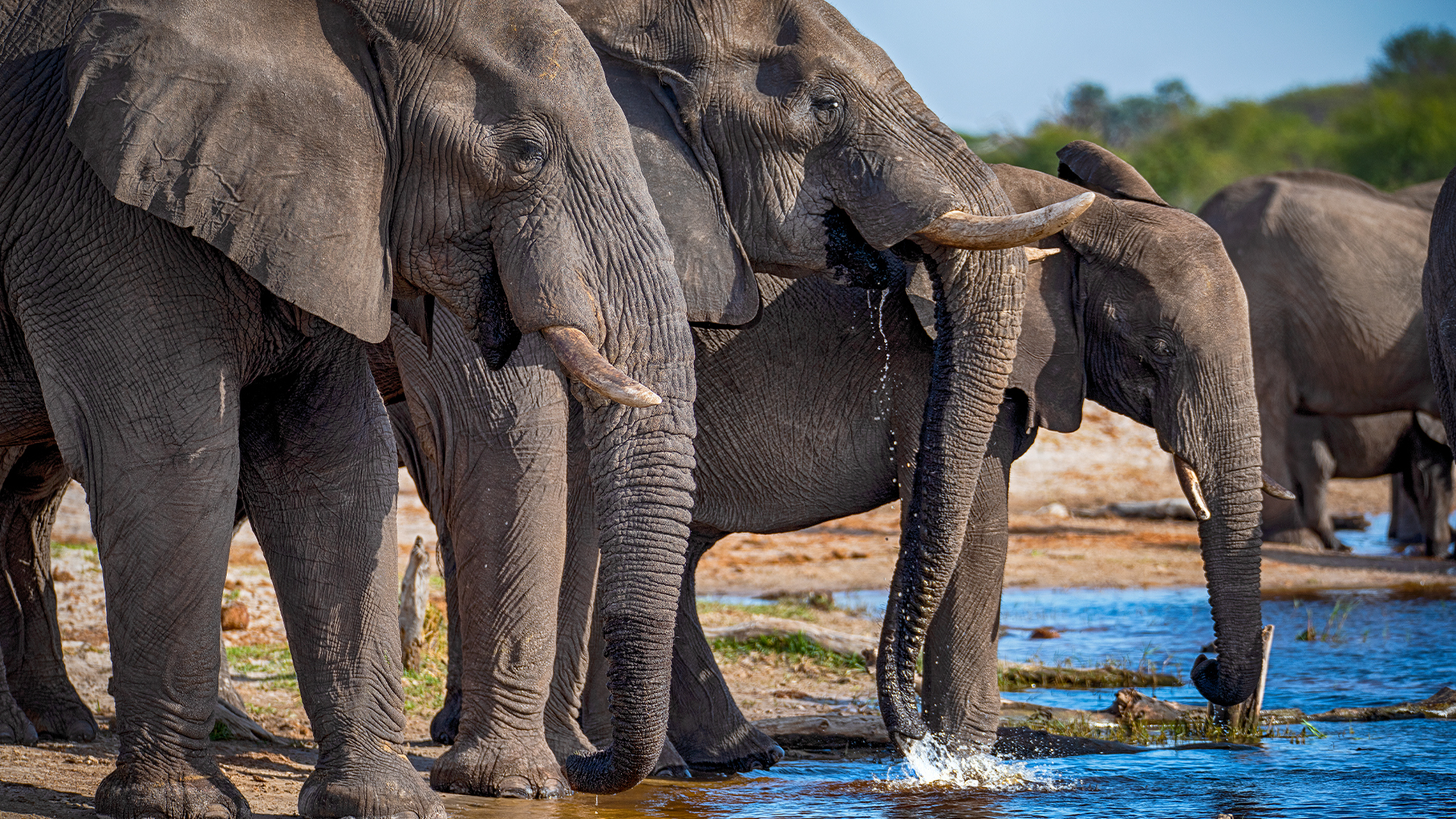
Elephants are famous for their incredible vocal communication skills, vital to their social lives. They can recognize the calls of hundreds of individuals from far away, using various sounds like trumpets, squeals, cries, roars, and groans. Interestingly, their deep rumbling noises, often considered their signature, serve as unique identifiers for many animals, almost like names.
Most of their communication happens in infrasonic frequencies, a sound too low for humans to hear, which allows them to convey messages over long distances. These rumbles are essential for breeding, reuniting separated family members, and warning others of potential dangers like predators.
Compared to other animals, elephants’ vocalizations demonstrate advanced traits such as mimicry and emotional memory. These vocalizations are vital for elephant life, from reuniting separated family groups to warning others of predators. They play a crucial role in breeding and maintaining social bonds with remaining elephants.
African vs Asian Elephants: Understanding Human Language
African elephants (Loxodonta africana) and Asian elephants (Elephas maximus) exhibit fascinating differences in their understanding of human language. With their larger social structures and complex communication systems, African elephants show a remarkable sensitivity to human commands, mainly when they involve their familiar caregivers.
They can often respond to specific cues and training with impressive accuracy, which lets elephants figure out potential threats by responding differently to recordings of different human tribes. This demonstrates their remarkable memory and knowledge of the humans they coexist with.
African elephants can differentiate between human voices from various African ethnic groups, specifically highlighting their ability to identify tones from Maasai women and Kamba men. This distinction is significant as it suggests that elephants can recognize threats based on the history of interactions with these groups, demonstrating a complex understanding of human social cues.
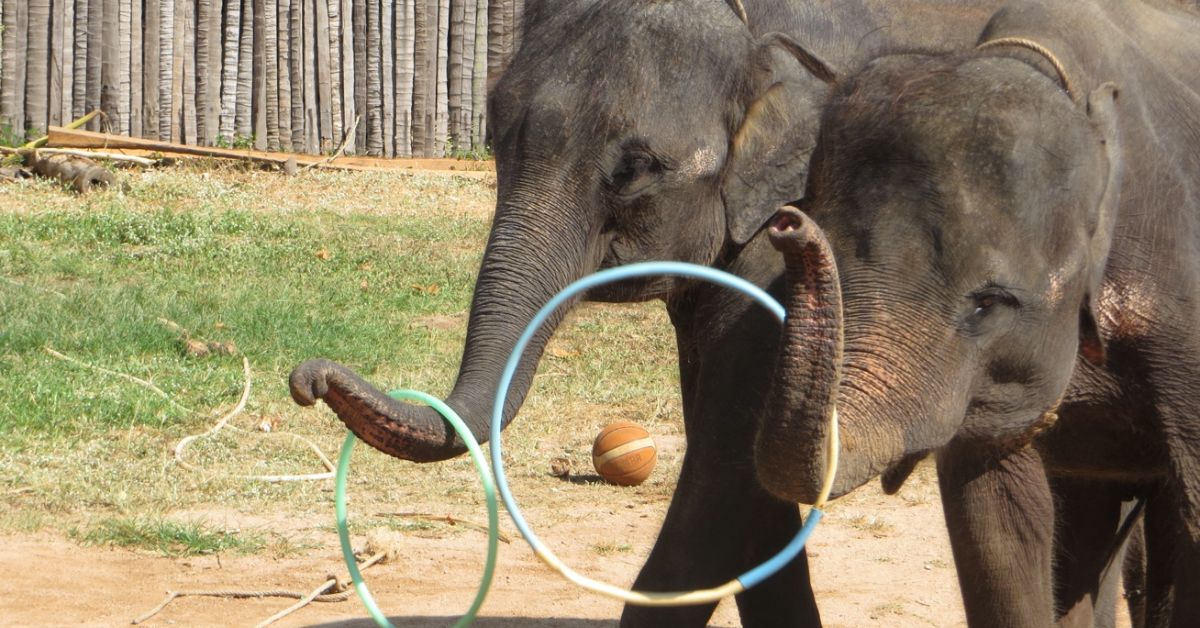
In contrast, Asian elephants, although capable of understanding human instructions, rely more on conditioned responses and structured training methods. Their interactions with humans often involve clear, repetitive commands and gestures.
While both species have demonstrated the ability to grasp human language to some extent, African elephants tend to exhibit a broader range of understanding due to their more intricate social dynamics and communication skills.
Do elephants have names?
Isn’t it fascinating how personal names are such a unique part of human language? We often take them for granted! While other species, like dolphins and parrots, communicate with each other, they don’t quite have “names” in the same way we do.
Instead, they might address each other by imitating the calls of the individual they’re speaking to. It’s an exciting difference because our names aren’t typically made up of sounds we make ourselves!
Now, let’s talk about elephants. These majestic creatures are long-lived and have big brains, just like us. They’re pretty unique in how they communicate—they use a language filled with intricate sounds and gestures to convey complex thoughts. And they’ve got a lot to share, from social gossip to ecological wisdom!
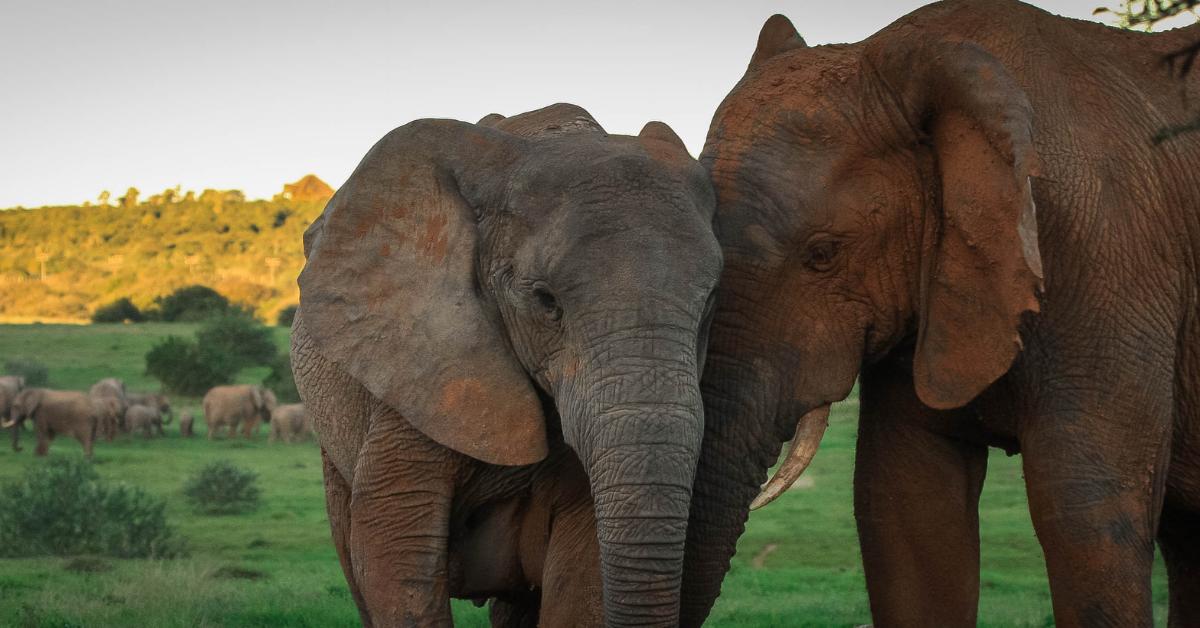
Elephant families are intensely matriarchal and exhibit solid familial bonds. They often suffer significant distress from losing family members, particularly the matriarch. They also showcase cooperative skills and knowledge passed down through generations.
These sounds are deep and powerful, capable of travelling miles through the forest without trouble. Imagine wild elephants sending messages and warnings to each other over long distances without us even realizing it! They have their secret language that we’re just starting to understand.
Identifying Human Languages: A Case Study
In the beautiful Amboseli National Park in Kenya, elephants roam freely alongside the tribes of Maasai pastoralists and Kamba men. It’s a lovely scene of coexistence, where humans and elephants share the land in harmony. Amidst this harmonious coexistence, an intriguing study in Kenya explored how these gentle giants respond to different human voices.
Maasai pastoralists in the Amboseli National Park often conflict with elephants over vital resources like access to water and grazing space for their cattle. Unfortunately, this sometimes results in elephants being speared out of retaliation when a Maasai’s life has been lost.
Due to these historical conflicts, the voices of Maasai men are particularly associated with danger. On the other hand, the Kamba tribe, with their agricultural lifestyle, poses no such threat to the elephants within the national park.
In controlled playback experiments, researchers delved into how elephants distinguish between Maasai and Kamba voices. Recording both tribes’ voices saying, “Look, look over there; a group of elephants is coming,” the researchers observed the elephants’ reactions to recorded voices across 47 family groups during daylight hours.
The researchers recorded various voices saying the exact phrase to observe how elephants responded differently based on the speaker’s voice and perceived threat level. The findings from this experiment were genuinely astounding! When the elephants heard the Maasai voices, they’d cautiously gather and then retreat, sensing potential danger.
However, when the Kamba voices filled the air, the elephants remained calm in recognition of this sound, as if there was no immediate threat. This experiment has shed a lot of light on an elephant’s incredible ability to discern between different languages and assess potential risks based on the source of the voice. It’s almost as if they have a built-in understanding of who’s friend and foe!
But what’s even more incredible is that researchers found that these majestic creatures don’t just react in fear; they exhibit a nuanced understanding of their environment, recognizing that open chatter from the Maasai suggests no immediate threat. This speaks volumes on their remarkable cognitive abilities and awareness.
As we uncover more about animal intelligence and behaviour, one thing becomes abundantly clear: While elephants may instinctively know what sounds signify danger, they may also be able to learn and adapt from each other’s experiences.
In a recent groundbreaking study, scientists have unveiled an intriguing aspect of elephant communication: their unique warning system for imminent danger and how it could be a game changer in reducing human-elephant conflict. This study was published in Proceedings of the National Academy of Sciences.
Using Bees to Save Elephants
When it comes to farming, elephants stand out—literally! Their large size means they can’t exactly blend in, sometimes munching on crops, trampling fields, and even breaking fences. The elephant population in Tanzania has declined drastically since the 1970s, and while anti-poaching laws have provided some relief, another significant challenge remains.
Tanzania’s farms are expanding, encroaching upon the elephants’ habitat, and disrupting their migration routes, leading to conflicts over land use and casualties on both sides. But here’s the ingenious part: to prevent these casualties from escalating, they’re leveraging a simple fact—elephants are scared of bees.
Constructing fences made of beehives allows smaller animals to pass through but also effectively deters elephants from entering and damaging fields and crops. Elephants are renowned for their phenomenal memories. Even if they experience pain from a bee sting just once, they will remember that discomfort and actively avoid returning to an area where they might reencounter it.
This win-win solution promotes harmony between humans and elephants while stimulating economic growth through sustainable practices like beekeeping. Alas, Elephants are far too intelligent to be easily fooled by humans for long.
We’ve witnessed elephants’ remarkable ability to understand language and observed their intricate communication among themselves. But what about mimicry? Can these gentle giants imitate sounds like some of their avian and marine counterparts?
Elephants can mimic human voices
Vocal imitation is a fascinating ability found in some species, notably birds, but it’s not commonly observed in elephants. While elephants are undeniably intelligent and can learn to imitate certain sounds through training, such as environmental noises or commands from caretakers, they lack the vocal anatomy and cognitive capacity to recognize and replicate human speech. Instead, elephants communicate through their unique vocalizations, body language, and gestures.
Interestingly, African elephants also exhibit mimicry talents, showcasing their advanced communication skills and cognitive abilities. However, there are rare instances of elephants imitating human words. One notable case is Kosik, an adult male Asian elephant who could accurately mimic Korean speech patterns and fundamental frequencies to the point that native speakers of their own language could understand him.
Kosik, born in captivity and extensively exposed to human speech by his trainers, veterinarians, guides, and tourists, would use his trunk to modify the shape of his vocal tract during controlled phonation to produce these imitations. According to his trainers, his vocabulary reportedly consisted of six words.
But why did Kosik imitate human speech? Many speculate that it stemmed from social deprivation during a crucial bonding and social development period. Separated from other elephants since age five, Kosik may have turned to humans for companionship and sought to bond with his trainers by imitating their speech.
It’s important to approach such claims cautiously, as they are susceptible to the observer-expectancy effect and could be misinterpreted as forms of mimicry or fabrication for various reasons. Nonetheless, cases like Kosik’s provide intriguing insights into animal behaviour and communication complexities.
Conclusion
As we delve into the fascinating world of elephant communication, it’s clear that these gentle giants possess remarkable cognitive abilities. While we’re still unravelling the mysteries of their language-like calls, one thing is sure: there’s more going on in the minds of these animals than we previously imagined.
Our knowledgeable guides will take you on memorable safaris, offering valuable insights into elephant behaviour and the conservation initiatives dedicated to preserving these iconic creatures.
Frequently Asked Questions (FAQs)
1. Can elephants understand human language?
Elephants are known for their high intelligence and have demonstrated an exceptional ability to understand certain human words and commands when trained. Research has shown that elephants can respond to specific verbal cues, recognizing their meaning. This understanding is similar to fluency in human language but indicates a strong capacity for associative learning and comprehension of basic commands.
2. How do elephants respond to human commands?
Elephants Respond to human commands by combining learned behaviour and their natural intelligence. Trainers often use consistent verbal cues, gestures, and rewards to teach elephants specific actions.
Over time, elephants learn to associate certain words with actions, allowing them to respond appropriately. This training process showcases their ability to understand and react to human language cues.
3. Are elephants able to distinguish between different human languages?
Studies have shown that elephants can distinguish between different human languages. For example, research conducted in Kenya found that elephants reacted differently to the sounds of Maasai and Kamba languages, recognizing which posed a threat and which did not. This ability to differentiate languages suggests that elephants have a sophisticated understanding of vocal cues, even beyond their immediate training.
4. How do elephants communicate with humans?
Elephants communicate with humans primarily through body language, vocalizations, and learned behaviours. While they do not speak human languages, they can use sounds such as trumpeting, rumbling, and even specific gestures to convey their needs or emotions. In situations where elephants have been trained, they can follow verbal commands and respond in ways that indicate their understanding.
5. What role does body language play in elephants’ understanding of human language?
Body language plays a critical role in how elephants understand human communication. Elephants are highly perceptive to human gestures, posture, and facial expressions.
Trainers often use body language in conjunction with verbal commands to reinforce the meaning of words. This multimodal communication helps elephants to understand better and respond to human interactions.
6. Can wild elephants understand human language, or is this ability limited to trained elephants?
While trained elephants are more capable of understanding specific human commands, wild elephants also show a remarkable ability to interpret human intentions through vocal tones and body language.
Wild elephants can detect humans’ emotional states and may respond accordingly, though they are less likely to understand specific verbal commands unless they have had previous interactions with humans.
7. How does the intelligence of elephants compare to other animals in understanding human language?
Elephants are deemed among the most intelligent animals, with cognitive abilities likened to those of great apes, dolphins, and parrots. Their ability to understand human language, follow commands, and communicate complex emotions puts them in a unique category of animals demonstrating advanced cognitive functions. Elephants’ large brains, particularly the areas associated with memory and emotion, contribute to their capacity for understanding and interaction.
8. Do elephants understand the meaning behind the words, or are they simply responding to tone and cues?
Elephants primarily respond to the tone, inflexion, and associated cues rather than the meaning of individual words. However, through consistent training, elephants can associate specific words with actions or outcomes, leading to a form of understanding. While this is not the same as comprehending language as humans do, it shows that elephants can grasp the concept behind the words used in their training.
9. How do elephants’ social structures influence their ability to understand human language?
Elephants live in complex social structures that require sophisticated communication among herd members. This social intelligence likely enhances their ability to understand and respond to human communication. Elephants are used to interpreting social cues from other elephants, which may make them more adept at picking up on human signals, including language and body language.
10. Are there cultural differences in how elephants understand human language?
Cultural differences can influence how elephants understand human language, particularly in areas where elephants are commonly domesticated and interact closely with humans. In regions where elephants have been used in work or tourism, they are more likely to be trained to understand specific commands. Conversely, in areas where human-elephant interactions are minimal or purely based on observation, elephants may exhibit a different level of understanding.
11. Can elephants understand emotions in human speech?
Elephants are known to be highly empathetic and can sense emotions in human speech. They respond differently to tones that convey happiness, anger, or distress.
This sensitivity to emotional cues is part of their broader social intelligence and helps them interact more effectively with humans. This understanding is particularly evident in domesticated elephants with regular, close contact with humans.
12. How do elephants’ memory and cognitive abilities contribute to their understanding of human language?
Elephants have exceptional memories, which play a significant role in their ability to understand and recall human commands. Their cognitive abilities allow them to learn and retain information about specific words, actions, and associated consequences. This strong memory and intelligence enable elephants to develop a nuanced understanding of human language over time.
13. Do elephants show different levels of understanding based on the individual trainer or person?
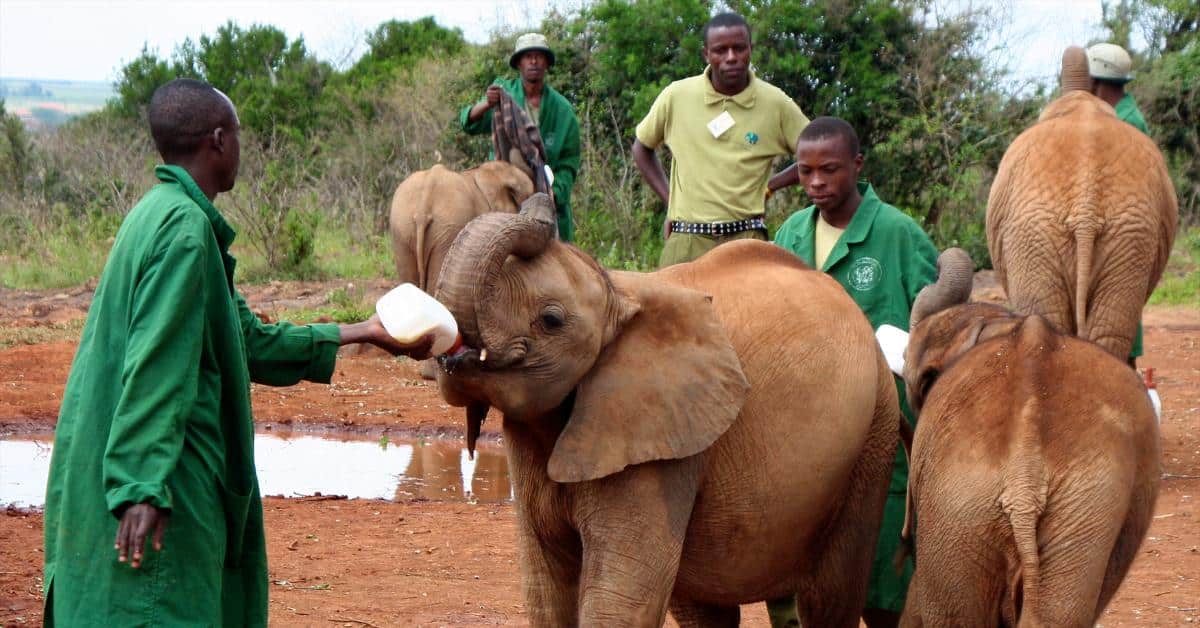
Yes, elephants can show varying levels of understanding based on their relationship with individual trainers or people. Elephants can form strong bonds with their handlers, enhancing their command responsiveness. Trust and familiarity play critical roles in how effectively an elephant understands and follows human language cues, as they are more likely to be receptive to someone they trust and recognize.
14. How can understanding elephants’ intelligence and communication improve human-elephant relationships?
Understanding elephants’ intelligence and capacity to comprehend human language can significantly improve human-elephant relationships. By recognizing their cognitive abilities and treating them respectfully, trainers and handlers can develop more effective communication methods that enhance cooperation and reduce conflict. This understanding also fosters a greater appreciation for elephants’ social complexity, leading to better conservation efforts and more humane treatment of these remarkable animals.