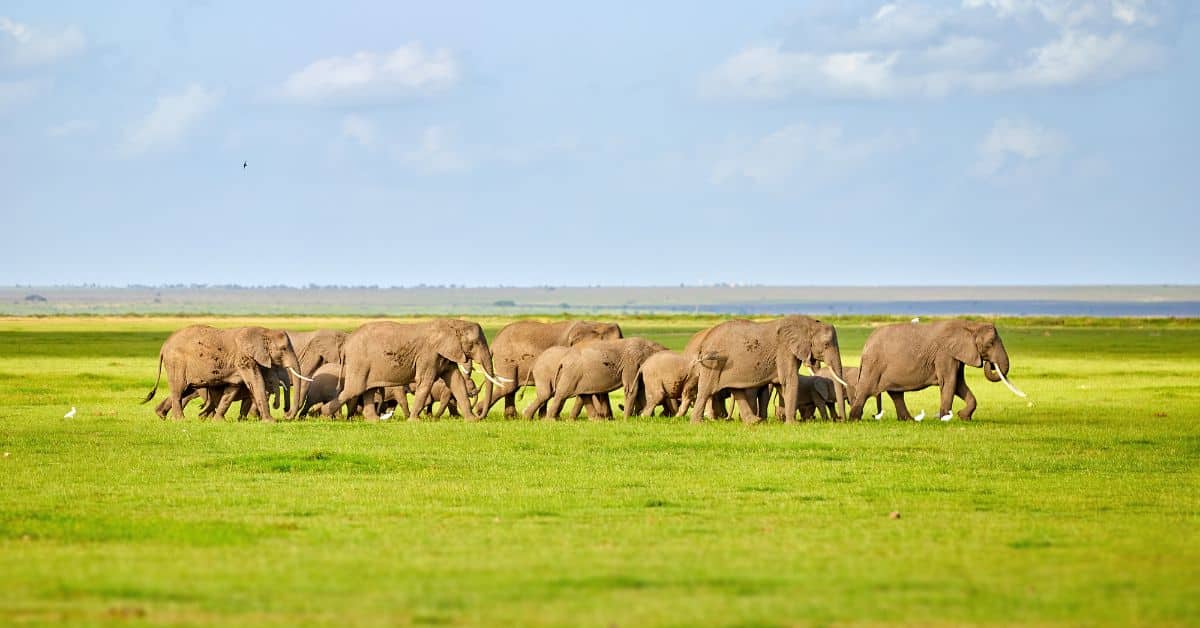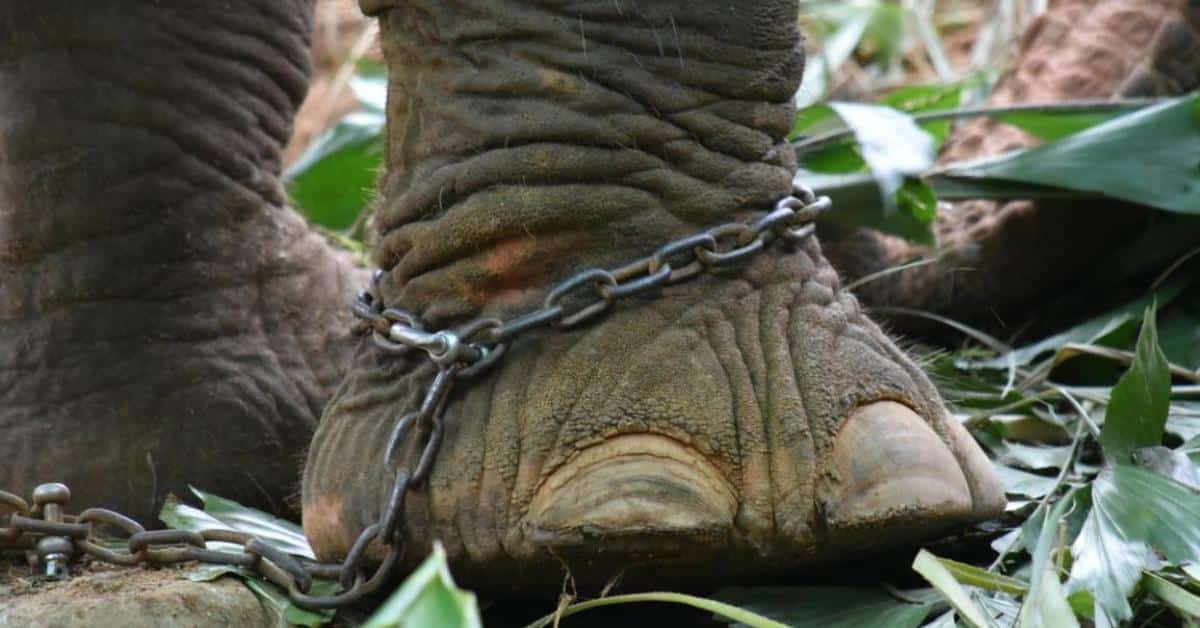



The African Elephant: a member of the African Big 5 and a symbol of strength and grace. Its sheer size represents the untamed spirit of the continent. These majestic and powerful animals mesmerize us with more than just their physical presence.
Here at Easy Travel, we’re on a mission to understand elephant endangerment’s complexities, uncover the forces threatening these majestic creatures, and discover how we can lend a hand in their protection.
However, how much do we truly know about these remarkable beings? Let’s take a closer look into the world of elephants and unravel the mysteries that make them one of Earth’s most enchanting creatures.
How many different species of elephants are there?
There are currently three recognized species of elephants:
1. African Bush Elephant (Loxodonta africana): The African savannah or bush elephant is the largest of all living elephant species, reaching up to 4 meters at the shoulder and weighing up to 6,000 kilograms. Once found throughout sub-Saharan Africa, the effects of poaching for ivory and habitat destruction have caused these terrestrial mammals’ numbers and geographic range to decline rapidly.
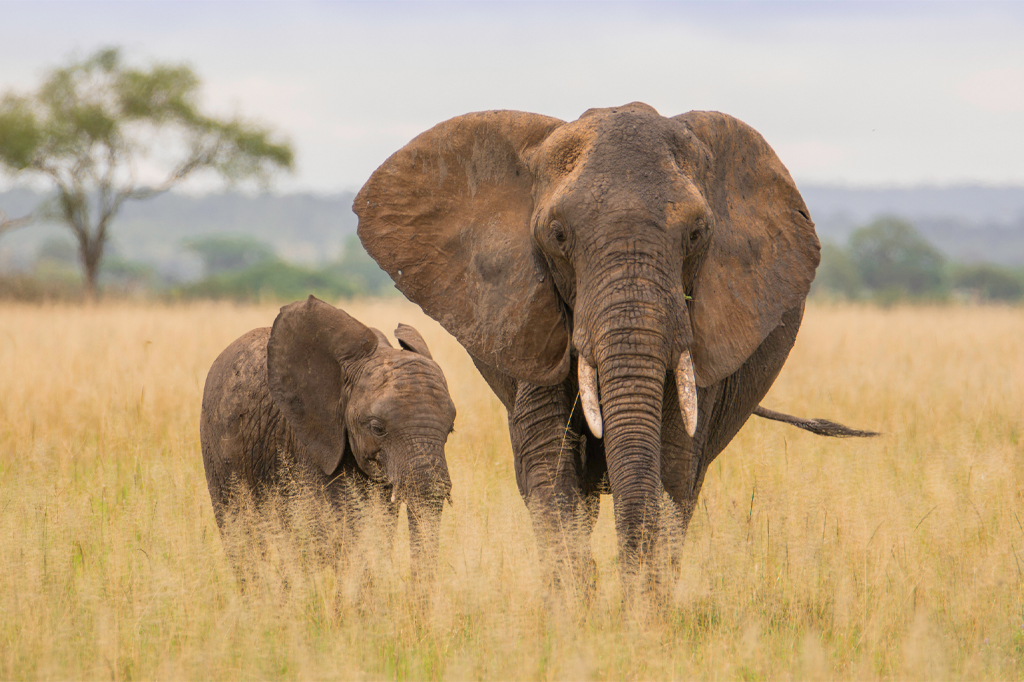

Conservation organizations have now classified the African savanna elephant as critically endangered. They reside in pockets scattered across 23 African countries, ranging from savannas and forests to deserts.
The African elephant species face significant threats, including illegal wildlife trade, habitat loss, and human-elephant conflict. The forest elephant (Loxodonta cyclotis) is critically endangered, while the savanna elephant (Loxodonta africana) is endangered. Urgent conservation efforts are needed to protect these iconic mammals.
2. African Forest Elephant (Loxodonta cyclotis): The African forest elephant is smaller than its bush elephant counterpart and is found in the dense forests of Central and Western Africa. African forest elephants reach approximately 2.4-3 meters in height and can weigh between 1,800 and 5,400 kilograms. The male forest elephants are more significant than the females, and both have rounded ears and straighter, downward-pointing tusks compared to the African savanna elephant.
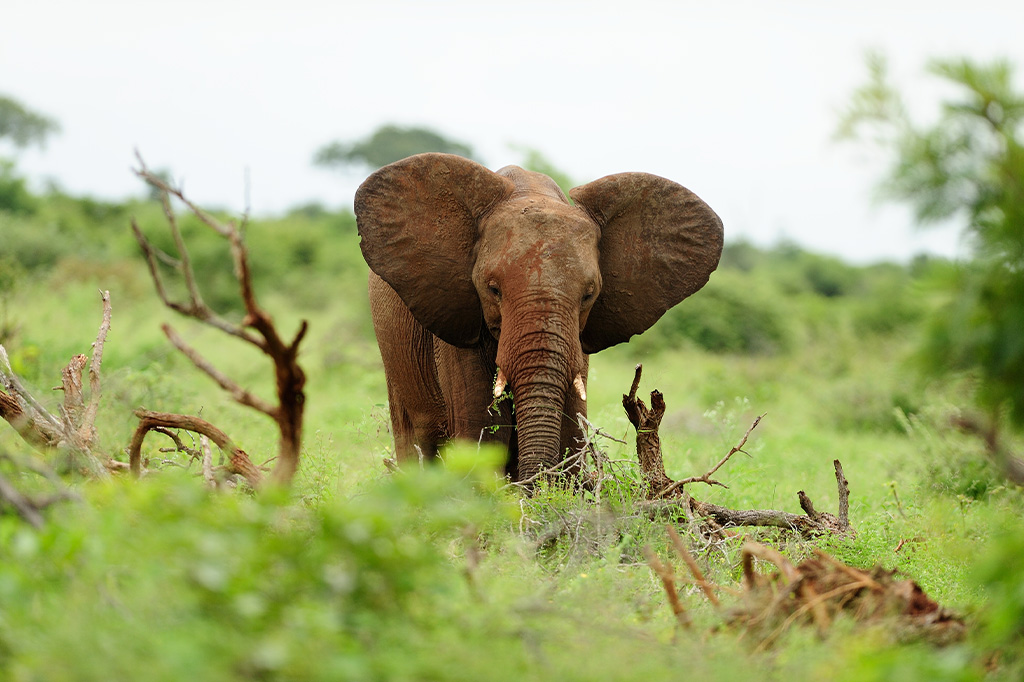
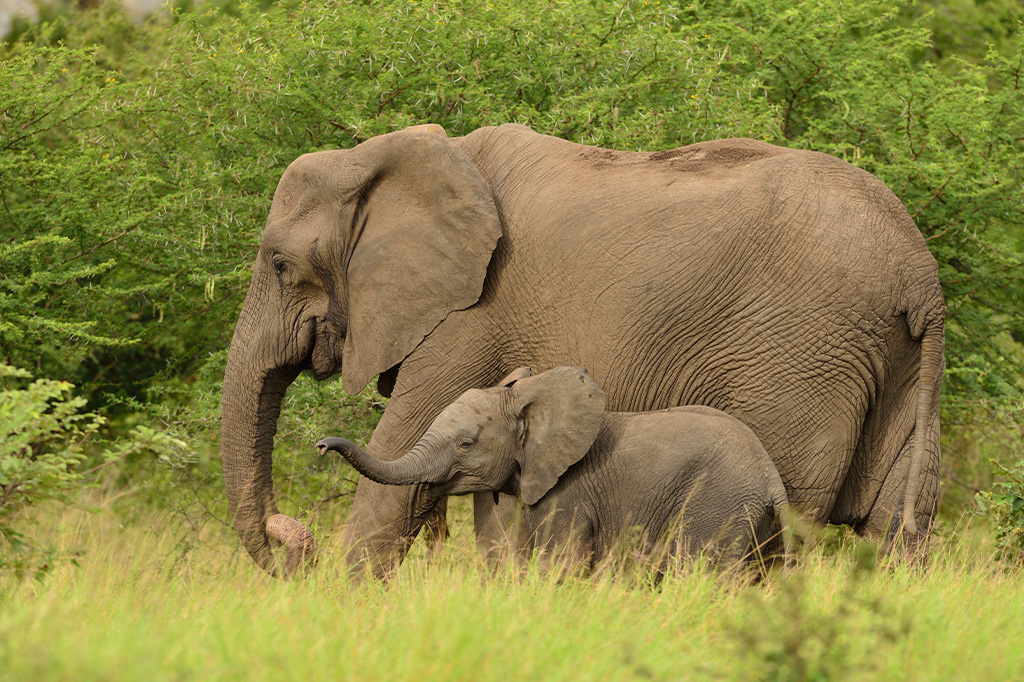
Another distinction can be found on the elephant’s toes. The African forest elephant has five toenails on its forefeet and four on its hindfeet, unlike the African bush elephant, which has four toenails on its forefeet and three on its hindfeet. Like the bush elephant, the forest elephant is also critically endangered.
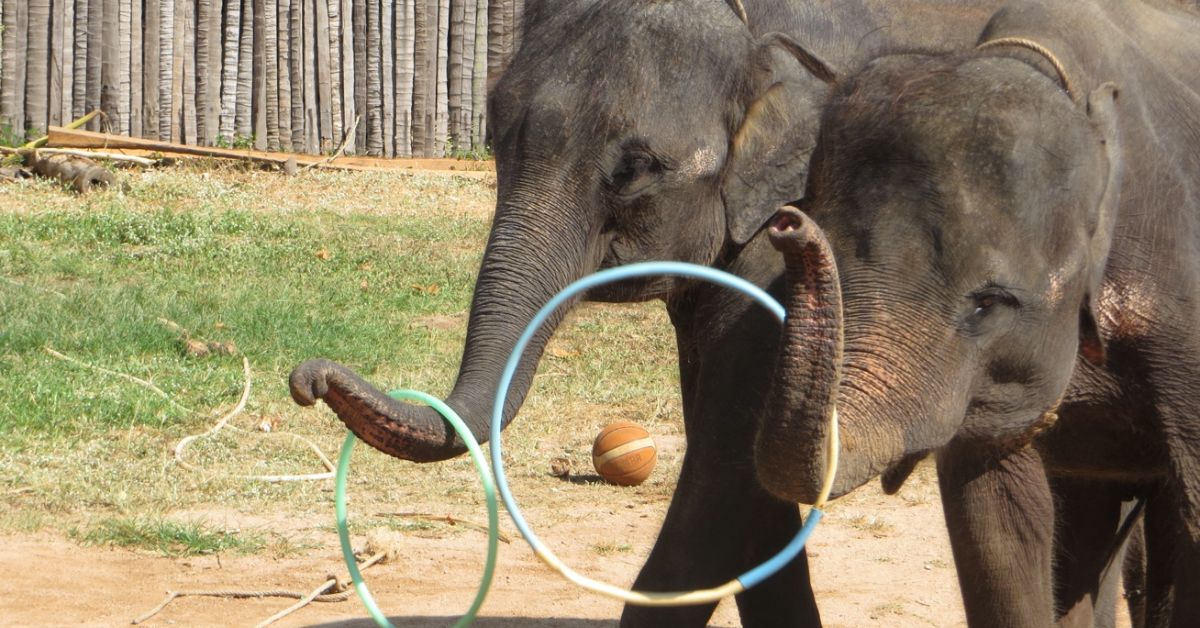
3. Asian Elephant (Elephas maximus): The Asian elephant, also known as the Asiatic elephant, is found in 13 countries in south and southeast Asia. Adult Asian elephants weigh about 5,500 kilograms and can grow up to a shoulder height of 3.5 meters.


The Asian elephant inhabits dry to wet forest and grassland habitats and is divided into three subspecies: the Indian elephant, the Sri Lankan elephant, and the Sumatran elephant. Within the elephant family, Asian elephants and mammoths are more closely related to one another than African elephants are either.
Asian elephants are sexually dimorphic, with males taller and bulkier than females; the female Asian elephants do not possess tusks, although some male Asian elephants are also tuskless. Asian elephants are highly sociable, forming groups of six to seven related females led by the matriarch. Like African elephants, these groups occasionally join others to form larger herds, but these associations usually take longer to live.
Elephant births and baby care
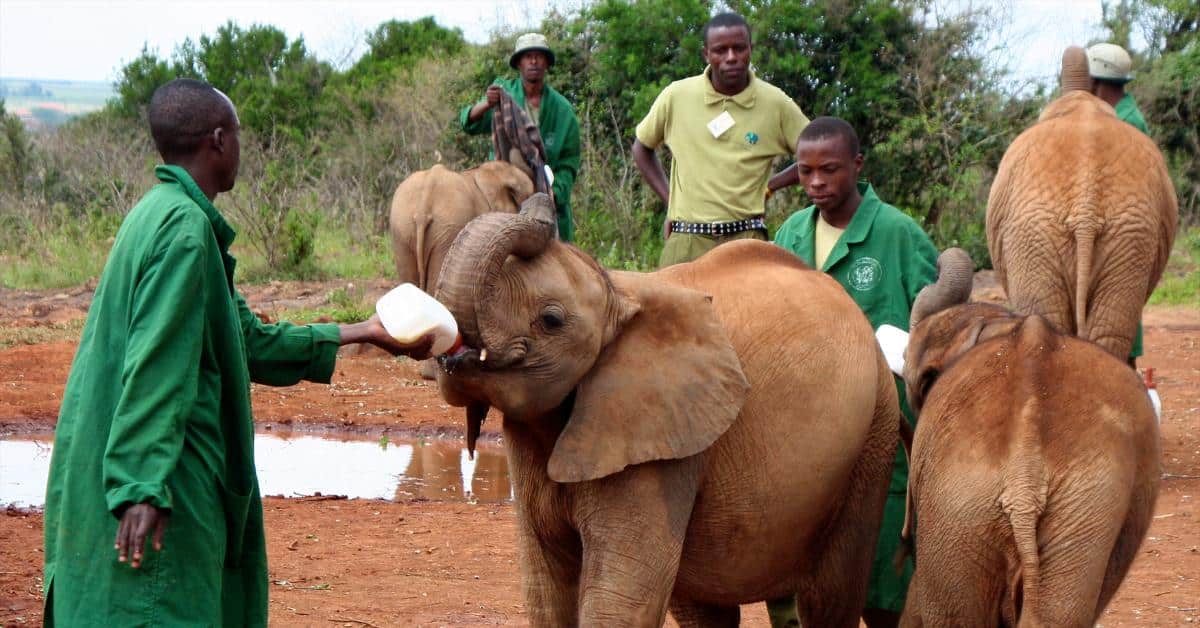
After a long gestation period of up to 22 months, a proud mother elephant gives birth to her calf. Just like human children, elephant calves require the help and support of their families.
At birth, the 260-pound newborn is helped to its feet by its mother and other females, standing almost immediately after birth. Within two days, the calf is strong enough to join the rest of the herd that is patiently waiting nearby.


Female African elephants play a crucial role in caring for calves, using their tusks and trunks to assist in various activities such as digging for food and water and protecting the young ones.
Baby elephants are blind at birth, relying on their trunks and mothers to help them. With a sweet tooth for mother’s milk, these little ones remain dependent for about two years, with some going up to three years!
Why are baby elephants born without tusks?
This sad display of unnatural selection is primarily attributed to the pressures of poaching. Individuals with smaller or no tusks are more likely to survive in regions where African elephants are heavily targeted for their ivory.


This is an example of rapid evolutionary change, where elephants with a genetic predisposition for smaller or absent tusks are likelier to pass on their genes to the next generation. The increased trustlessness in specific elephant populations is considered an adaptation to the threat of poaching, as elephants with smaller or absent tusks are less attractive targets for ivory hunters.
However, it’s important to note that trustlessness does not occur uniformly across all elephant populations, and the prevalence can vary widely between regions.
How many years does a baby elephant stay with its mother?
Even after being weaned, elephants stay with their mothers for about 16 years, about the same time a human child relies on their parents. Throughout these years, the calf continues to learn and socialize while staying close to its mother.
As the elephant enters adolescence, it gradually interacts more with the broader herd. Total independence is generally achieved in the early twenties, but elephants often maintain strong social bonds with their mothers and family members.
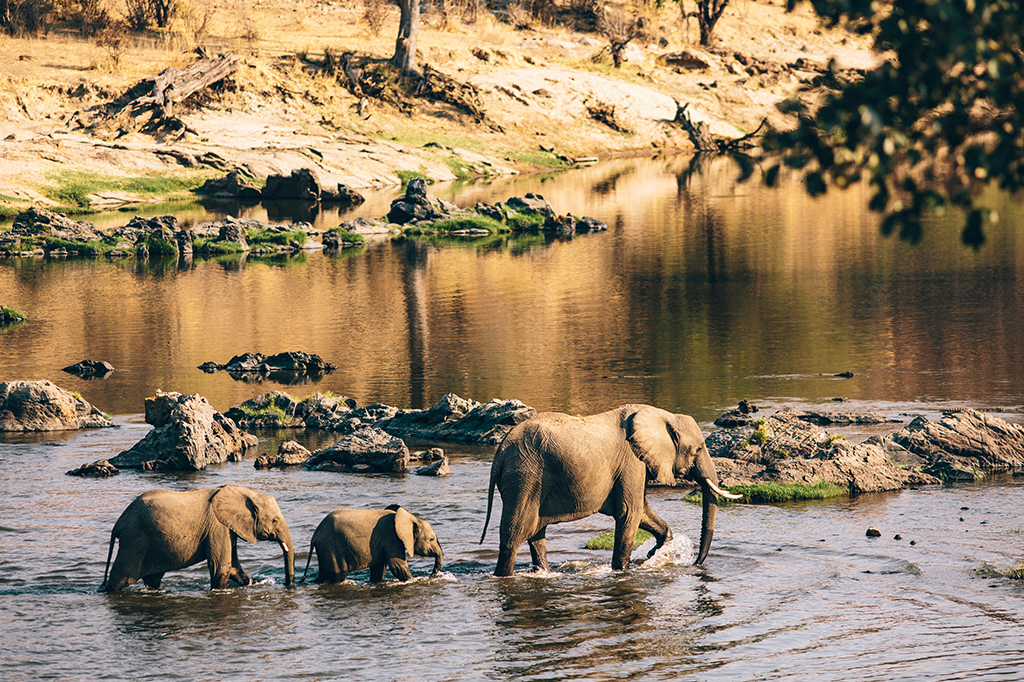
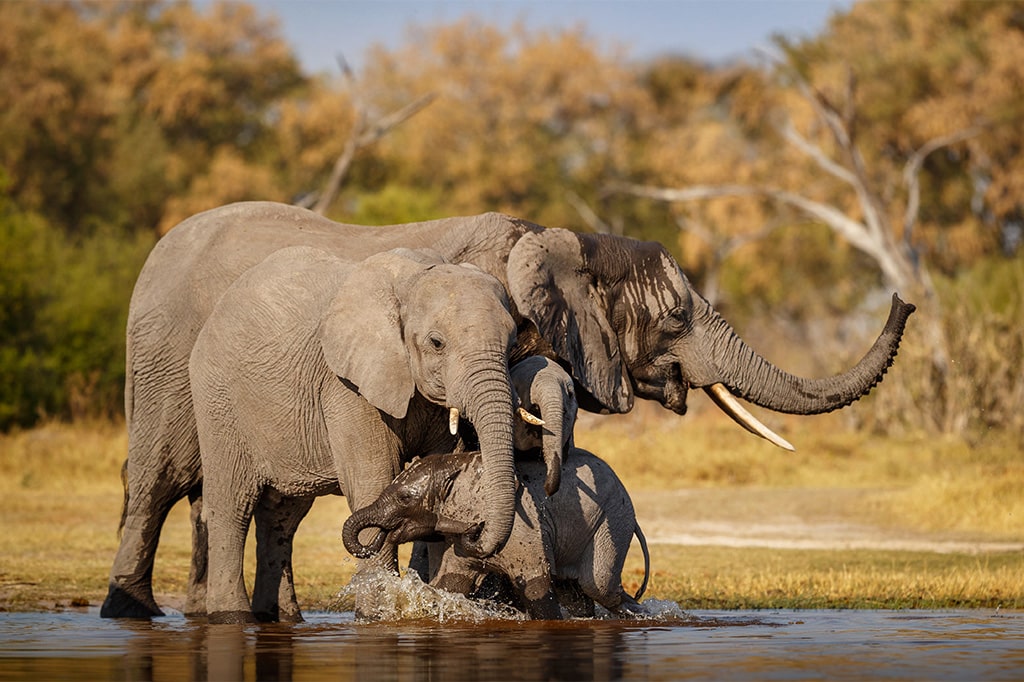
Male elephants separate from their original herd, creating looser partnerships with other males. At the same time, some may opt for a more solitary lifestyle, roaming on their own or with a few companions (often called askaris) and meeting up with breeding herds when the cows come into season.
Female elephants usually remain within their natal herd throughout their lives, providing support when it comes to sharing the responsibility of caring for calves.
Elephant herds and hierarchy
Most Elephant herds are matriarchal and may contain up to 100 family members, with the oldest and most dominant female being the matriarch. She is the backbone of the elephant family unit, providing stability and determining ranging patterns for the rest of the family.


Knowledge of the ancient routes is handed down from generation to generation, with the alpha cow leading them confidently through the brush. Wildlife corridors are crucial in maintaining connectivity for elephant herds as they navigate their habitats, ensuring they can access essential resources like food and water.
The other females comprising the family unit are usually the matriarch’s daughters and their offspring. Their primary function is protecting and rearing calves, assisting in calf movements, foraging, protection, and social experiences.
Elephant Adolescence
Young elephants reach adolescence around 10 – 13, with males leaving the family unit between 12 and 15. Adult males are solitary, but not all male elephants are loners.


The friendly young males will seek out older male elephants, known as “Bulls,” to form large herds of young males and older bulls. These herds are not as stable as the family herds of females and calves, and many males leave the herd while others join.
During their time in these large herds, the young males will learn vital life skills by observing and learning from each other and the older bulls. As they age, they will usually become more solitary, reaching adulthood around 18-20 years, having grown to become the largest animal on land.
Elephant Migration Patterns
African Elephants are naturally migratory and generally follow the same routes as their ancestors. The migration distances vary considerably depending on environmental conditions, food, water availability, and danger!


African elephants live across 37 countries in sub-Saharan Africa, requiring vast areas with access to food and water. Their habitat needs have significantly reduced since 1979, with some populations thriving in secure areas while others face challenges due to isolation and declining numbers.
The matriarchs lead the herd, who use their remarkable memory to recall migratory routes known as “corridors.” They also keep the family safe by leading the animals to ripe feeding grounds with the changing seasons.
African elephants usually migrate at the beginning of the dry season, heading toward more hospitable locations near rivers and water sources that aren’t prone to drying. As the rainy seasons come, the herds return to native regions to feed on the lush green vegetation that the rains have helped regenerate.
Several family groups may form a larger group called bond groups for migration; these groups provide additional security due to more sets of watchful eyes, benefitting from increased protection.
Elephant habitats


African elephants inhabit diverse ecosystems across sub-Saharan Africa, including savannas, forests, and grasslands. They require vast expanses of land with access to water and various vegetation for grazing and browsing.
In contrast, Asian elephants are found in various habitats, from dense tropical forests to grasslands and scrublands across South and Southeast Asia. Due to their reliance on regular water access, they often inhabit areas near rivers and water sources.
African forest elephants are primarily found in the dense rainforests of Central and West Africa. Their habitat includes lush, biodiverse forests with thick vegetation and ample water sources. These elephants have adapted to living in the understory of dense forests, where they browse a variety of plant species.
Do elephants remember faces?


While they may not have the most fantastic eyesight in the animal kingdom, an elephant never forgets a face. Matriarch elephants, in particular, develop strong “social” memories that distinguish friends from foes by smell and contact calls.
The better the matriarch recognizes friends, the more time other family members have to feed and breed safely; thus, more elephant calves are produced. They also appear to acknowledge many humans and individuals of their species, even when separated from them for decades.
Can an elephant swim?
Like all other mammals, elephants can indeed swim. They are great swimmers, especially the younger ones, and love being in the water. Elephants swim by moving all four legs; their giant bodies help to keep them afloat, and their trunks act as a built-in snorkel.


They can swim for miles, with baby elephants learning to swim only a few months old. In the wild, elephants may sometimes need to swim to get to food sources if the roads to those food sources have been flooded or if a typically shallow river rises in water level.
Can elephants swim in the ocean?
Elephants are usually located near fresh water sources, as salt water can irritate them, just like it can be to humans when it is too salty. However, some elephants have been observed swimming in salt water.


One famous example is a remarkable Asian elephant called Rajan, who lived on the Andaman Islands and often swam in the ocean and seemed to enjoy doing it! Alas, this is only an exception to the rule, and Rajan is most likely the last Asian elephant to be observed swimming in those salty waters.
What foods do elephants eat?
Nearly 80% of an elephant’s day is spent feeding on various plant life. They can consume from 300-600 pounds of food every single day. These gentle giants are herbivores, primarily eating leaves, tree bark, and fruits of trees and shrubs.
They only have four molars, two on top and two on the bottom of their mouth, with each molar weighing 5 pounds; they can only grow six sets of molars. African Elephants are also known as “Nature’s Gardeners” and are keystone species because of their role in the healthy functioning of an ecosystem.


They change landscapes by digging waterholes, creating footpaths, opening habitats, and dispersing seeds in their dung. Their bodies use only about 50% of their food, so their manure is extraordinarily nutrient-rich.
When elephant herds travel over vast grasslands, they disperse seeds in their dung, which helps the grasses generate new green growth. The dung is also rich in nutrients, making it the perfect fertilizer for the seeds, allowing them to germinate and grow. Seed dispersal allows for new plant growth, creating new habitats and food for other species.
How do elephants sleep?
In the wild, sleeping can be extremely dangerous for prey animals, especially for larger ones like elephants. Due to their weight, elephants cannot lie down frequently, making them highly vulnerable to various threats, such as lions or poachers. Their slow stature exposes them to danger when they are lying down.
On average, wild elephants sleep for only two hours a day, split into several shorter bursts of about two minutes. They may nap for a few minutes during the day, but they usually get most of their sleep at night, between 1 AM and 6 AM.


Elephants in a herd usually take turns sleeping so that in case of danger, the individuals who are awake can alert the rest of the herd. Herd matriarchs might not sleep for days since they must keep the herd safe.
When wild elephants nap during the day, they lean against a tree or large mound, rest their trunk on the ground and doze. In captivity, elephants sleep 3 to 7 hours at night, lying down for 1 to 5 hours at a time and getting up to feed in between naps.
Anatomy of the African Elephant


1. The Trunk
Also known as a proboscis, an elephant’s trunk is an extension of its upper lip and nose. It is fitted with extensive sensory motor cells, which give it a strong sense of touch.
It can perceive pressure differences as light as 0.25 mm, the equivalent of a light brush against the skin. This tactile appendage is overly sensitive yet assertive. Due to the absence of cartilage and bone, it can be brandished in almost all directions.
An elephant’s trunk is also a vital communication organ. Elephants know each other by smell and can pick up the scent of comrades and relatives with it. They can also express gestures of friendship or appeasement. The ability to sustain such social relations over large distances and time without daily contact requires complex brain performance.
2. The Tusks
Elephant tusks are enlarged incisor teeth made of ivory. They are used for many things, from defense, digging, and lifting objects to gathering food and stripping bark to eat from trees.
Female African elephants also use their tusks for various activities, such as digging for food and water. Just like people are left—and right-handed, elephants also rely upon a dominant tusk, which is why one tusk appears shorter.
3. The Foot
Elephants move with the elegance of ballet dancers, walking on their tiptoes. Their foot structure is designed with an angled skeleton and a large pad with connective tissue at the heel.
To protect themselves from the harsh savannah elements, elephants enjoy mud baths, plastering themselves in mud and dirt; the natural wrinkles in their skin help retain moisture while allowing excess heat to escape.
4. The Ears
African elephants have large ears, shaped much like the beautiful African continent they are located in. The wide surface area of the ears and blood vessels found on the back of their ears when flapping help the elephant stay cool under the blaze of the African sun.
Asian elephants have noticeably smaller ears and a smaller head that is twin-domed with an indent in the middle, as opposed to the African elephant’s more round, fuller heads.
Interesting facts about elephants:
1. Their Tusks are teeth – Elephant tusks are enlarged incisor teeth that first appear when elephants reach two years of age and continue to grow throughout their lives. They can grow up to 7 inches yearly, reaching impressive lengths that sometimes exceed 10 feet. The tusks serve various purposes, including foraging, defense, and social interactions.
2. Elephants communicate through vibrations –They can communicate through seismic signals that elephants can detect through their bones. This is only one of the many ways that elephants can communicate, the others being trumpet calls, body language, touch, and scent.
3. Elephants can recognize themselves in a mirror – This capability is often considered an indicator of self-awareness. Elephants have passed this experiment by displaying behaviors such as exploring parts of their bodies they wouldn’t usually see without the aid of a mirror.
4. They can mimic human voices—In a baffling display of vocal talent, in 2012, an Asian elephant in a South Korean zoo named Kosik reportedly learned to imitate certain Korean words by placing his trunk in his mouth and manipulating it to produce sounds resembling human speech. However, we must note that this behavior is considered rare and is not a typical or natural part of elephant communication.
Elephants and the Ivory Trade


Poachers kill about 20,000 elephants each year for their ivory tusks, which are then traded illegally in the international market to eventually become ivory trinkets. This international illegal trade is mainly driven by the demand for ivory in many parts of Asia, especially China, where elephant tusks are carved into sculptures or used in other products because ivory, in certain cultures, is considered a symbol of luck, wealth, and status. If the illegal ivory trade continues at its current rate, elephants may be faced with extinction.
In 1989, a global agreement among governments banned the international commercial trade in elephant ivory. Following this action, the illegal ivory trade dropped, but the international trade began to surge again around 2010 due to renewed customer interest in the purchase of elephant and ivory products.
Asian elephants vs African elephants: Tusks
Forest elephants are more likely to become extinct than savanna elephants because their tusks are denser and, thus, more desirable to carvers than ivory of any other species.
Forest elephants have lost 30% of their geographical range to human settlements, and 62% of all forest elephants have been killed for their ivory in the last decade. Getting forest elephants and reversing the 62% decline would take 81 years.


In the past, ivory poaching had a limited impact on Asian elephants because only adult males had tusks. Even then, poaching would occur only 25% of the time as the tusks of an Asian elephant tend to be more porous and prone to cracking, making them less desirable for carving intricate designs.
But now, skin poaching has become a bigger problem than killing elephants for their ivory. This is because it is indiscriminate, targeting adult males, females, and calves; the elephant’s skin is then transformed into red blood beads and sold as jewelry.
Elephant Behaviors and Personalities


1. Are elephants territorial?
Elephants could be more territorial. Young adult bulls test their strengths by pushing over trees, but only one or two bulls in a group will make it a specialty.
They assess each other’s strength through sparring or play-fighting, with dominance closely related to a bull’s size, power, and weight. As the bull matures, these characteristics increase.
2. Elephant Musth
Elephants possess a musth gland just below the skin, located halfway between the eye and ear on each side of their head. These glands secrete an oily, musky substance and become inflamed, resulting in a physiological change associated with a behavior change observed in adult males called musth, characterized by unpredictable, dominant, and excitable behavior.
Bulls in musth are particularly prevalent, and non-musth bulls and younger males tend to avoid confrontations with them.
Why do elephants touch each other with their trunks?
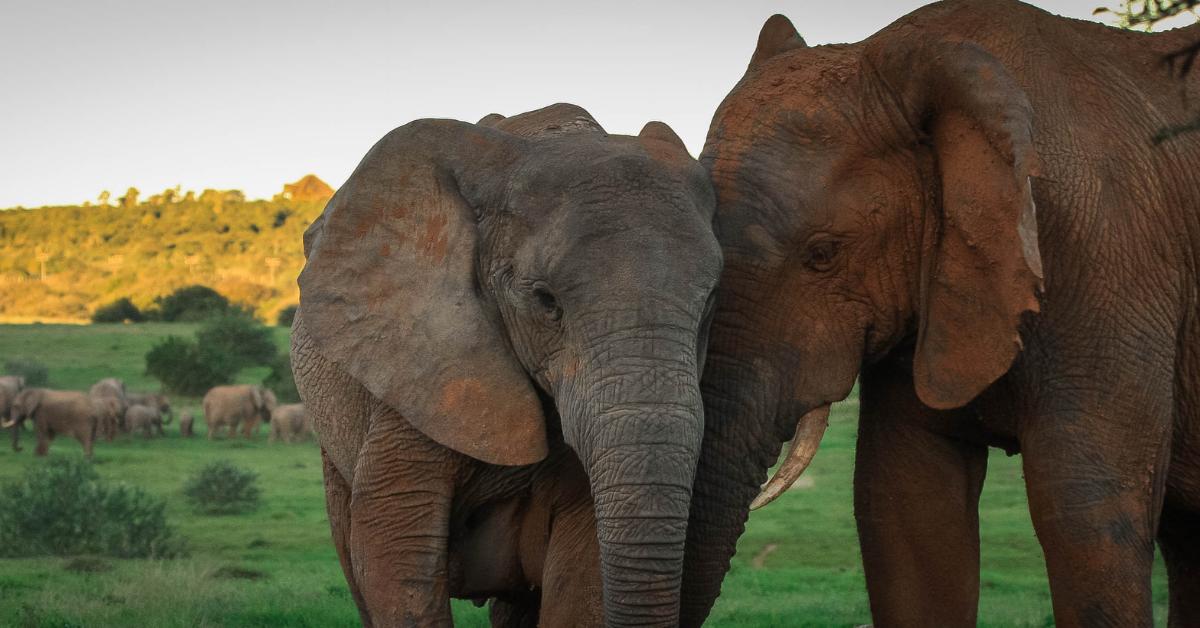
You’ve likely seen an elephant using their trunk to reach for another elephant’s mouth. The trunk is an essential social behavior tool to touch, stroke, explore, caress, and embrace.


One reason for this display of touch is to offer reassurance and comfort; when elephants encounter a threat, they may bunch together and place their trunks in each other’s mouths to reassure each other. Elephant cows may also set their trunks in a calf’s mouth to soothe or comfort them.
When in conflict, one elephant may place its trunk in the mouth of the other in a form of reconciliation. When attempting to get another elephant to move or do something specific, an elephant may place its trunk in another elephant’s mouth, thus using its trunk to guide the other elephant.
Are elephants afraid of mice?
There’s been a long-standing belief that elephants are afraid of mice. No one is sure where this old belief came from, with many claiming it’s due to the elephants’ fear of a mouse crawling up their trunks. Elephants are, in fact, afraid of bees…Strange.


A bee stinger or any other insect bite cannot pierce the thick hide of an elephant’s skin, but when bees swarm, they may sting an elephant in its most sensitive areas, including the trunk, mouth, and eyes. And it hurts a lot.
Are elephants intelligent?
Elephants possess the largest brain of any land animal and three times as many neurons as humans. Many of these neurons control the elephant’s large and elegant body. An elephant’s brain weighs an impressive 11 pounds (5 kilograms).


These creatures have demonstrated impressive mental capabilities in a series of remarkable actions performed either via experimental analysis or simply in the wild, such as:
1. They use tools. These gentle giants have been known to use sticks to scratch their backs in unreachable spots and fashion a swatter from a branch to keep the flies away. These intelligent creatures dig holes for drinking water and then fashion a ball by tying chewed bark over the hold, letting the water save for them to drink water and preventing evaporation.
2. Elephants can identify languages. African elephants can identify human gender, age, and ethnicity-based solely on the sound of their voice. This ability allows elephants to switch into defensive mode when hearing a voice belonging to someone more likely to threaten them.
Elephants can learn to associate specific human movements or postures with commands, requests, or even particular behaviors.
Do elephants know their names?


Many consider naming uniquely human, yet new research may suggest otherwise. For the first time, it has been shown in Amboseli, Kenya, that African savannah elephants will change the structure of their rumbling vocalizations based on the individual they are communicating with, giving them a unique vocal label—in effect, a name!
Researchers of this study believe the use of names may effectively help elephants to stay connected with different members of their herd and know where each other is, strengthening the bond between individual elephants.
Do elephants exact revenge?
As the saying goes, “an elephant never forgets,” whether it be cruelty or compassion. Despite their vast size and strength, elephants are incredibly gentle and have a deep understanding of their power.
Females, however, may be aggressive when young calves are around, and bulls can also be exceptionally aggressive during musth. There are a couple of examples where elephants have exhibited aggressive behaviors towards humans, such as in 2014 when a captive elephant named Maharajah went on a rampage during a religious festival in Kerala, India.


The elephant, who had a history of abusive mistreatment, killed local people and his handler before being restrained. At the Kruger National Park, an elephant trampled a suspected poacher to death who had illegally entered the park to poach rhinos when they encountered the elephant.
On the other hand, elephants can also show compassion and appreciation for humans who have shown them kindness. For example, 2012, when conservationist Lawrence Anthony passed away, a herd of elephants traveled 12 hours to stand vigil at his house.
Elephants vs Lions: who is the true King of the Jungle?
Predation is a rarity in the world of elephants—their colossal size and formidable presence often leave them as the undisputed kings of the savannah. While tales of predatory adventures are scarce, carnivores, such as lions, hyenas, and crocodiles, may prey upon young, sick, or injured elephants.


With an average lifespan of about 65 years or more, the greatest threat to an elephant is human impact, either through habitat loss or poaching. Increased human settlement has led to significant obstructions in elephant migration routes, and wherever there is less room for nature and animals, conflict is close.
The long war on poaching has resulted in a significant reduction of the elephant population, leaving many young elephants orphaned and making them more susceptible to predators, injuries, and diseases.
Can lions take down an elephant?
Traditionally, the lion has been dubbed “King of the Jungle.” Still, when an elephant and a lion encounter in the wild, it’s clear that there is a healthy respect for the elephant for the lion. Usually, lions avoid hunting adult elephants and only attempt to attack young elephant calves when they become separated from the herd.


However, in Matusadona National Park, Zimbabwe, an individual coalition of male lions seems to specialize in hunting adult elephants. They are still determining how or why they do it, mainly because they are in an ecosystem with an adequate supply of alternative prey, making it even more baffling.
Grief, Loss, and Elephant Mortality
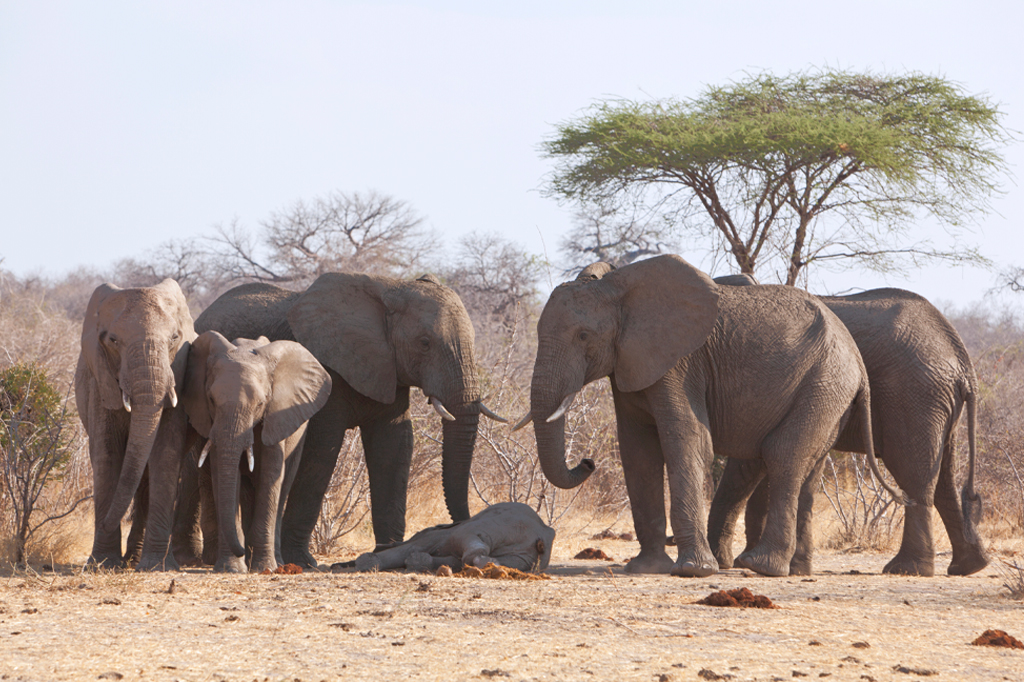
1. Elephant Burials
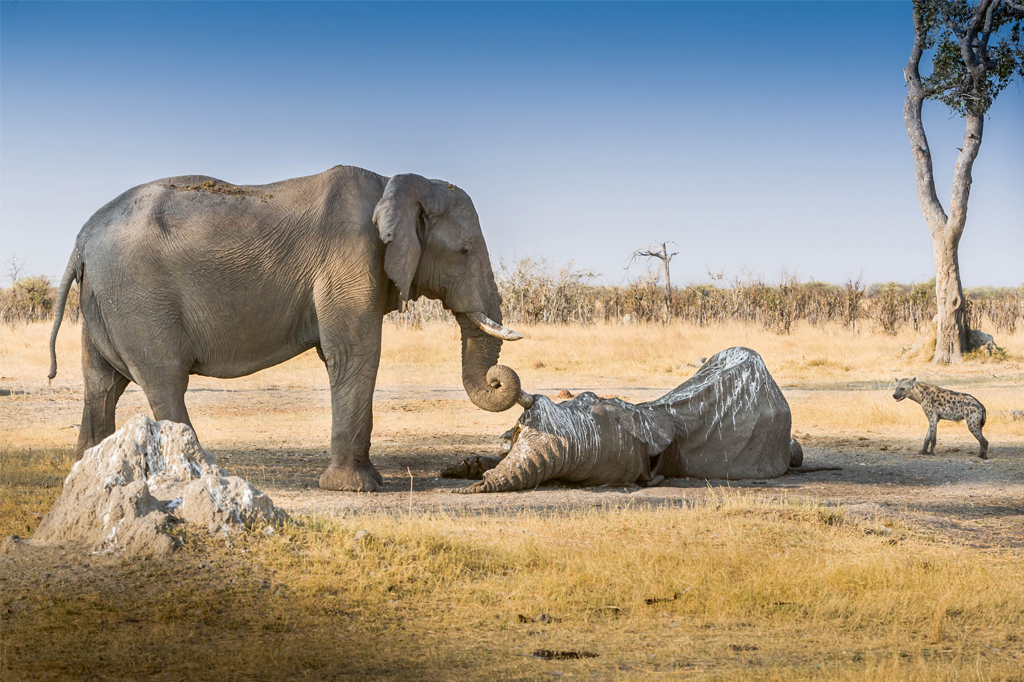
An elephant’s response to death is probably the strangest thing about them. They almost always react to dead elephants’ remains and, on rare occasions, even human remains. African elephants sometimes cover their dead with soil and vegetation, making them the only animals, apart from humans, who sometimes perform simple burials.
In some cases, after a young elephant dies, its mother may act depressed, lingering by the body for days on end to guard it against predators before eventually moving on. In other cases, some elephants have been seen carrying sick or dead babies on their tusks; their bonds, like ours, are vital. Perhaps they, too, like us, have a hard time letting go.
2. How long do Elephants live?
Due to their massive size and incredibly thick skin, elephants lack any natural predators and will live to become very old. African elephants usually reach the age of 50-65 but can sometimes reach 70.
An uncommon cause of death is when an elephant cannot chew its food. Down to their last set of molars, a critical chapter unfolds. After years of grinding down plant material with their teeth, the elephant will no longer be able to chew and eventually succumb to starvation and die.
3. Do elephants remember their dead?
Elephants have demonstrated exciting reactions to the deaths of their kind, often displaying human-like symptoms of grief and mourning unlike any other animals, save for humans.
4. can elephants cry?
Elephants can produce tears from a set of glands and ducts around the eyes called the lacrimal gland, but to equate this with crying is still, for many, anthropomorphism. While humans are the only species currently known to produce “emotional” tears, all terrestrial mammals must produce some liquid to keep their eyeballs lubricated and irritant-free.
However, abundant anecdotal evidence has led to various controlled field experiments showing that elephants exhibit a wide range of emotions similar to humans.
5. How many African Elephants are left in the world?
According to the WWF, approximately 415,000 African Elephants are left in the world. However, their numbers are a tiny fraction of what they were in the past, having shrunk by 98% since the 1500s.
African elephants face a population decline primarily due to illegal poaching, driven by the massive demand for ivory tusks, habitat loss, and fragmentation caused by human settlements, which leads to conflicts with local communities. Conservation groups and their efforts in targeting anti-poaching measures, habitat protection, and community involvement are crucial to ensuring the survival of African Elephants.
6. Which country has the most elephants in Africa?
Botswana has the largest population of elephants in Africa. These majestic creatures can be found in various wildlife reserves and national parks nationwide.
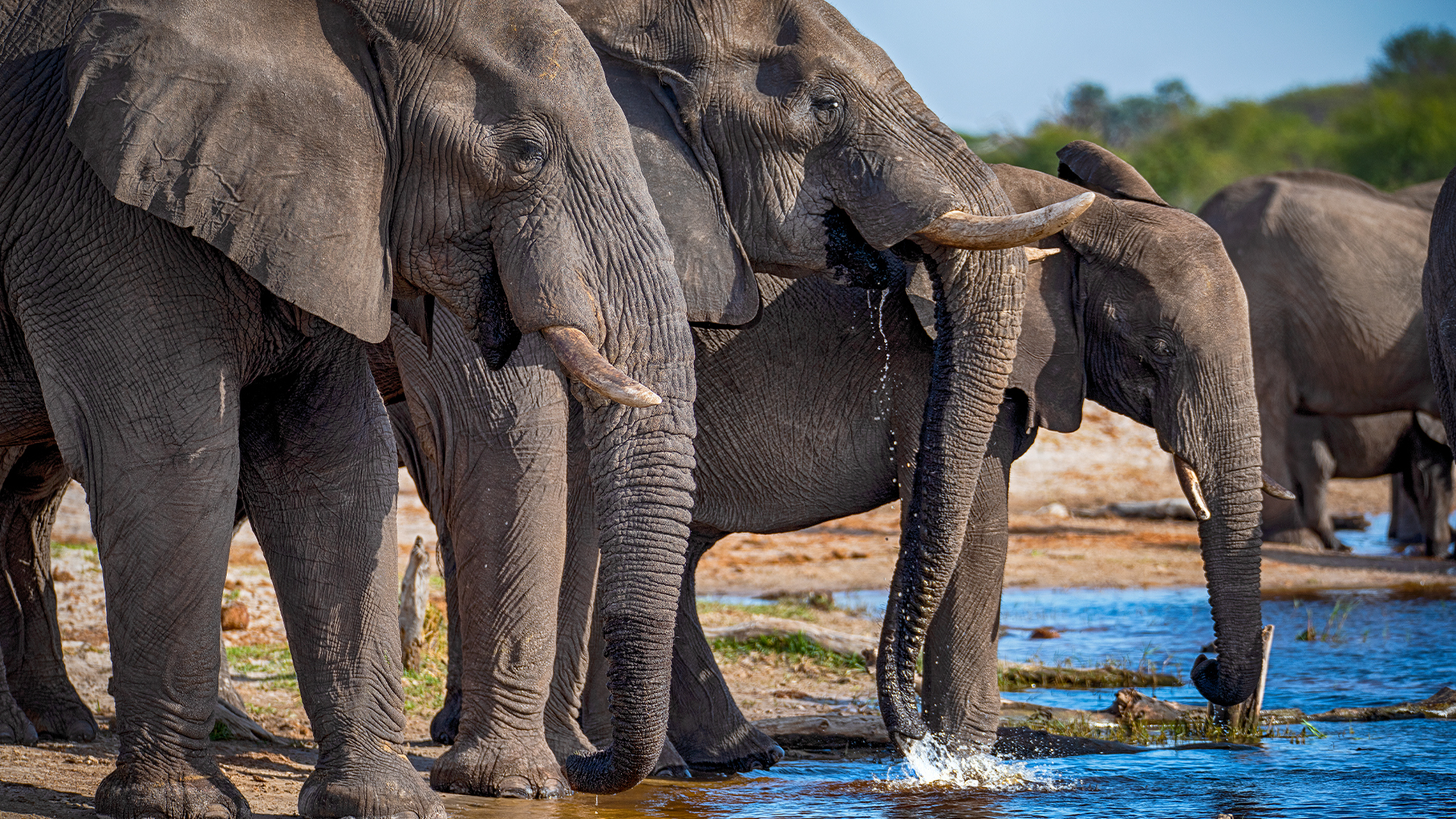
Chobe National Park has the largest elephant concentration due to its diverse ecosystems and abundant vegetation, making it a suitable habitat for thriving elephant populations. The Chobe River is a vital water source during the dry season.
It attracts numerous elephants congregating along the riverbanks, making it an incredible sight for nature lovers worldwide.
7. What country is best to see elephants in Africa?
Tanzania is an excellent choice for witnessing elephants in Africa and a premier destination for elephant enthusiasts. Some key places to observe these majestic creatures include Tarangire National Park, famous for its large elephant herds that can be monitored against the incredible backdrop of baobab trees and diverse landscapes.
Tanzania’s commitment to its varied ecosystems makes it a top choice for experiencing the beauty of elephants in their natural habitats.
Where to see Africa’s Gentle Giants Up Close

1. Tanzania
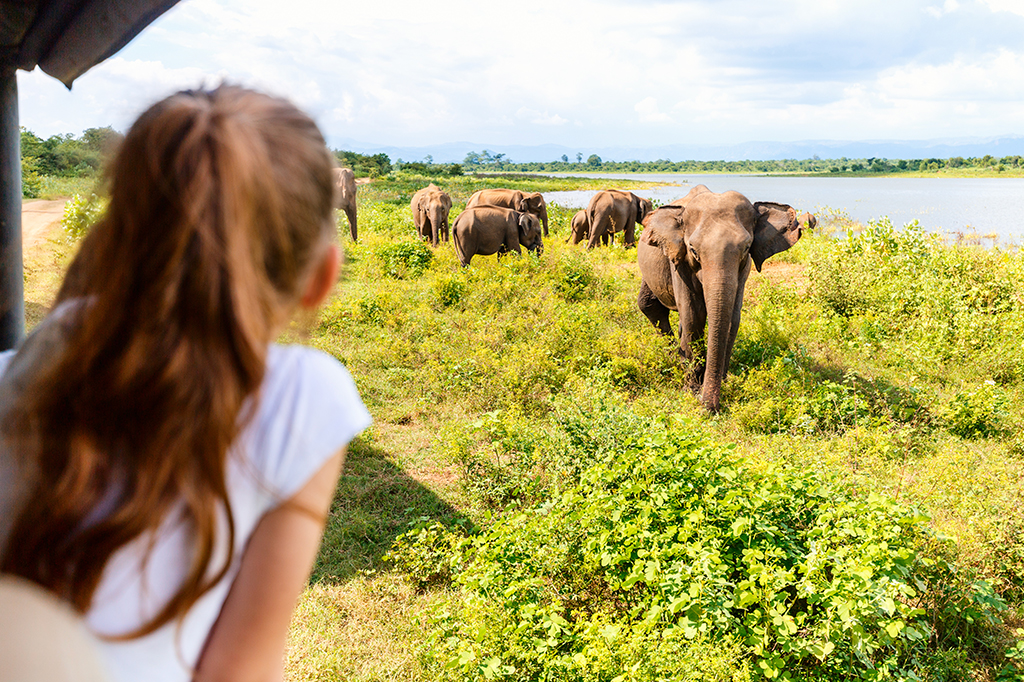
Tanzania boasts several exceptional locations for elephant viewing. Tarangire National Park, well-known for its vast herds and iconic baobab trees, promises a unique safari experience. Serengeti National Park also hosts a thriving elephant population, adding to its wildlife diversity.
Ngorongoro Conservation Area houses the Ngorongoro Crater, which offers a breathtaking amphitheater where elephants roam freely in a stunning natural setting. The remote Selous Game Reserve, now known as Nyerere National Park, provides an intimate and pristine environment for those seeking a more secluded elephant safari.
Witness the awe-inspiring presence of these gentle giants in a safari experience like no other in these countries:
2. Kenya
Maasai Mara National Reserve is a prime destination for elephant enthusiasts in Kenya. It offers a spectacular blend of wildlife, including majestic giants, against the backdrop of the Great Migration. Amboseli National Park, with its incredible views of African elephants beneath the mighty Mount Kilimanjaro, is another unmissable spot, providing a picturesque setting for unforgettable encounters.
3. Uganda
In Uganda, Murchison Falls National Park is a hidden gem where African elephants roam freely against the backdrop of the mighty Murchison Falls. This Ugandan treasure combines diverse flora and fauna with the awe-inspiring presence of elephants, creating a unique safari experience.
4. Botswana
Botswana, renowned for its abundant wildlife, is a haven for elephant enthusiasts. With one of Africa’s largest elephant populations, Chobe National Park offers unforgettable riverfront views and lush landscapes.
Moremi Game Reserve, situated inside the Okavango Delta, provides a lush oasis where elephants gracefully navigate waterways, adding to the overall magic of a Botswana safari. With its serene ambiance and water sources, Linyanti Wildlife Reserve invites visitors to witness elephants in a tranquil and exclusive setting.
Conclusion
Today, as conservation efforts become paramount, responsible tour operators play an essential role in safeguarding the well-being of elephants and their habitats. Easy Travel, a dedicated advocate for ethical tourism, is at the forefront of this initiative. By choosing Easy Travel, visitors witness the awe-inspiring sight of African elephants in their natural splendor and contribute to the ongoing preservation of these magnificent beings.
Join us in celebrating the magic of the African elephant, supporting their conservation, and creating memories that last a lifetime. We welcome visitors from local communities and a range of countries from across the globe to be part of this meaningful journey and experience the unparalleled joy of encountering elephants in the heart of Tanzania.
Elephant Fact Sheet
Scientific name: Loxodonta
Gestation period: 22 months
Height: 3.2 m
Speed: 40 km/h
Lifespan: 60 – 70 years
Class: Mammalia