


The global COVID-19 pandemic changed lives and livelihoods worldwide, and Kilimanjaro porters, whose primary income comes from guiding and supporting trekkers on Africa’s highest mountain, were hit particularly hard.
Travel restrictions and a drop in tourism vanished the income these essential mountain crew members rely on overnight. Recognizing the hardships faced by its Kilimanjaro porters, Easy Travel took quick and meaningful action to ensure these dedicated individuals and their families were supported through this challenging period.
In this blog, we’ll look at the challenges Kilimanjaro porters faced during the pandemic, Easy Travel’s steps to support them, and the lasting impact of these efforts.
The Impact of COVID-19 on Kilimanjaro Porters’ Livelihoods
When COVID-19 hit, tourism in Tanzania halted—with international flights canceled and visitors unable to access Kilimanjaro, porters and other crew members lost their primary source of income.
Climbing Kilimanjaro requires a substantial crew, including porters, guides, and cooks, to ensure that trekkers have a safe, enjoyable experience. Without tourists, however, these team members suddenly found themselves out of work without backup income.
Kilimanjaro porters are often the breadwinners for their families, and several family members rely on them for financial support. With their income gone, the pandemic’s economic impact on porters was severe, threatening their families’ access to basic needs like food, shelter, and healthcare.
Easy Travel cares for those who care for our guests

At Easy Travel, we value our crew’s well-being as much as our clients. Our porters, guides, and cooks are essential to the success of our tours, consistently going above and beyond to provide trekkers with a safe and memorable experience.
We knew we had to step in when the pandemic stripped them of their livelihoods. We began by discussing with our crew members what kind of assistance would be most beneficial. Their insights guided us in providing them with essential resources to meet their immediate needs and establish a plan to support their longer-term well-being.
Providing Food Support to Porters and Their Families

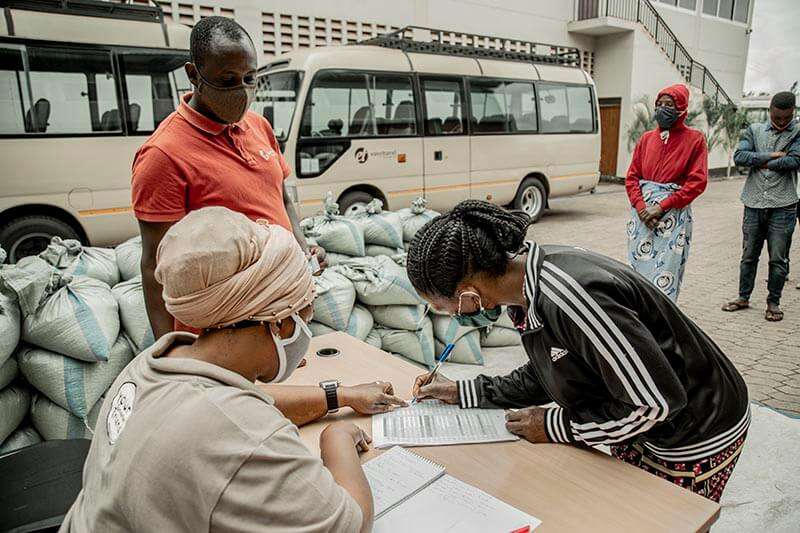
The first step in Easy Travel’s support plan involved providing food supplies to the porters. Maize, a staple in Tanzanian households, was chosen for its nutritional value and ease of distribution.
Easy Travel’s directors, Musaddiq and Sayyedah Gulamhussein, spearheaded a significant initiative to distribute nearly 22.5 tonnes of maize to 372 crew members, ensuring that each porter and family would have a reliable food source for at least three months.
This distribution operation was no small feat, but it was essential. As we handed out food supplies, we saw firsthand how vital this support was.
This distribution operation was no small feat, but it was essential. As we handed out food supplies, we saw firsthand how vital this support was.
A Sustainable Approach to Support: Farming Training and Resources
In addition to short-term food support, Easy Travel wanted to create a more sustainable solution for its crew members. Although the pandemic disrupted their incomes, we saw an opportunity to empower porters through sustainable farming practices. Working with the Kilimanjaro Porters Assistance Project (KPAP), we identified 30 porters already engaged in small-scale farming and trained them in modern farming techniques.
By enhancing their farming skills, Easy Travel aimed to provide the porters with an alternative, sustainable source of income that could be beneficial beyond the pandemic. The training sessions covered effective planting and harvesting techniques, crop management, and sustainable farming practices, all of which would help the porters grow crops more efficiently.
Tough times, tough guys – but still smiling and grateful!
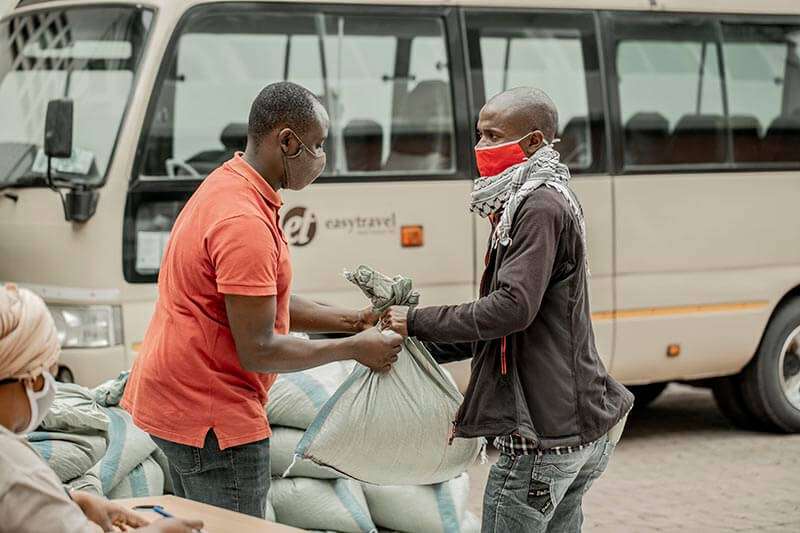
Many hikers comment favourably on the great spirit and resilience shown by the mountain crews who guide them up Kilimanjaro, how they encourage the hikers to reach the very top. In the COVID- 19 period, these adaptable crews are showing once again how they can face up to the biggest of challenges.

And they are grateful, too. Says Sam, one of Easy Travel’s trusted and experienced mountain guides: “ I am so proud of how Easy Travel has helped me and all my colleagues – porters, fellow guides and mountain chefs – in this really difficult time while we all wait for our work to resume. I wish that all Kilimanjaro operators would do the same.”
While the pandemic has certainly been a difficult time for everyone, it has shown the importance of having strong partnerships to provide support to those who need it. And it has given Easy Travel the chance to show its mountain crew members just how valued they are.
And they are grateful, too. Says Sam, one of Easy Travel’s trusted and experienced mountain guides: “ I am so proud of how Easy Travel has helped me and all my colleagues – porters, fellow guides and mountain chefs – in this really difficult time while we all wait for our work to resume. I wish that all Kilimanjaro operators would do the same.”
While the pandemic has certainly been a difficult time for everyone, it has shown the importance of having strong partnerships to provide support to those who need it. And it has given Easy Travel the chance to show its mountain crew members just how valued they are.
Land and Resources for Future Growth
To further support the porters’ transition into farming, Easy Travel’s directors generously allocated land for the crew members to grow maize. This land provided them with the means to apply their new farming skills, cultivating crops that would later be distributed among the crew, creating a supportive cycle that strengthened the whole community.
In addition to land, Easy Travel provided essential farming resources, such as seeds and tools, enabling the porters to start their crops with the supplies they needed. This approach to providing both training and resources helped ensure that the crew members could rely on farming to supplement their income during tough times and beyond.
Facing Tough Times with Resilience and Gratitude
The resilience of Kilimanjaro porters is well-known. These hardworking individuals routinely carry heavy loads up steep and unpredictable terrain, support climbers with a smile, and keep spirits high even when the ascent becomes challenging. But the pandemic tested their resilience in new ways, away from the mountain and without the camaraderie of trekkers by their side.
Despite the challenges, the crew members are grateful for Easy Travel’s efforts. Sam, one of our experienced mountain guides, expressed pride in how Easy Travel supported the entire Kilimanjaro team. “I am so proud of how Easy Travel has helped me and all my colleagues – porters, fellow guides, and mountain chefs – in this difficult time while we all wait for our work to resume. I wish that all Kilimanjaro operators would do the same,” he shared.
The Role of KPAP and Partnering for Positive Change
Our partnership with the Kilimanjaro Porters Assistance Project (KPAP) has created meaningful support for our porters. KPAP is a non-profit organization dedicated to improving the working conditions of porters on Mount Kilimanjaro. They have been instrumental in helping us understand the needs of our crew members and providing the resources necessary for their success.
By supporting our porters through the pandemic, Easy Travel reinforced the importance of their contributions. We understand that a thriving tourism industry depends on attracting visitors and maintaining the well-being of those who make travel experiences possible. Supporting our porters wasn’t just about meeting immediate needs; it was about recognizing their value to Tanzania’s tourism and investing in their futures.
Why Supporting Kilimanjaro Porters Matters
Kilimanjaro porters are essential to the success of trekking expeditions; they are the heart and soul of the journey. They ensure climbers’ safety and comfort, carry crucial supplies and provide motivation at every step. Their work is physically demanding, requiring skill, endurance, and dedication.
By supporting our porters through the pandemic, Easy Travel reinforced the importance of their contributions. We understand that a thriving tourism industry depends on attracting visitors and maintaining the well-being of those who make travel experiences possible. Supporting our porters wasn’t just about meeting immediate needs; it was about recognizing their value to Tanzania’s tourism and investing in their futures.
Looking Ahead: A Commitment to Continuous Support
As tourism recovers, Easy Travel remains committed to supporting its Kilimanjaro crew members. We continue to explore new ways to provide additional resources, training, and opportunities for personal and professional growth. We understand that the effects of the pandemic will linger, and we are dedicated to ensuring that our team members are empowered, supported, and equipped for future challenges.
Conclusion
The COVID-19 pandemic tested the resilience of the tourism industry and its people. For Easy Travel, the experience highlighted the strength of our bond with our Kilimanjaro crew members and the importance of standing by those who make our work possible. Through food distribution, farming initiatives, and training support, Easy Travel offered a lifeline to our porters, showing that our commitment to them extends far beyond the mountain trails.
Ready to experience Tanzania with a tour operator who cares? Easy Travel’s commitment to responsible tourism ensures that every trek is supported by a dedicated team that receives fair treatment and respect.zes, and training support, Easy Travel offered a lifeline to our porters, showing that our commitment to them extends far beyond the mountain trails.
Frequently Asked Questions (FAQs)
Who are Kilimanjaro porters, and why are they essential to climbing expeditions?
Kilimanjaro porters are the backbone of any trekking expedition on Mount Kilimanjaro. These hardworking individuals carry food, water, equipment, and other essentials to support climbers and guides.
They help set up camps, prepare meals, and assist trekkers throughout the journey. With porters, it would be easier for climbers to complete the trek, as they manage much of the logistical burden that allows trekkers to focus on their journey to the summit.
Porters’ local knowledge, physical strength, and endurance are invaluable, and their contributions make reaching the peak possible for thousands of climbers every year.
How did COVID-19 impact the livelihoods of Kilimanjaro porters?
The pandemic caused a sudden drop in tourism, which meant fewer treks and limited job opportunities for Kilimanjaro porters. These individuals often rely on trekking income to support their families, and with travel restrictions in place, they face significant financial hardship.
Due to the abrupt loss of income, many porters struggled to afford necessities like food, shelter, and healthcare. This sudden financial strain impacted the porters, their families, and the broader local communities that rely on tourism for economic stability.
How did Easy Travel support Kilimanjaro porters during the pandemic?
Easy Travel implemented several initiatives to support its Kilimanjaro porters during COVID-19. The company distributed 22.5 tonnes of maize to 372 crew members, providing a three-month food supply for porters and their families.
Additionally, Easy Travel allocated land, seeds, and farming tools to ensure porters could produce their crops, providing greater food security and economic resilience.
What role does the Kilimanjaro Porters Assistance Project (KPAP) play in supporting porters?
KPAP is a non-profit organization dedicated to improving the working conditions of porters on Kilimanjaro. It advocates for fair wages, ethical treatment, and better working conditions for porters.
KPAP also provides educational programs and resources, such as sustainable farming training during the pandemic. Partnering with organizations like Easy Travel, KPAP ensures porters receive proper compensation and support and promotes fair practices in the tourism industry on Kilimanjaro.
What kind of food assistance did Easy Travel provide to porters?
Easy Travel provided nearly 22.5 tonnes of maize to support 372 Kilimanjaro crew members and their families. This essential food distribution ensured porters had a reliable food source during the pandemic, with each household receiving enough maize for about three months. The initiative was designed to meet immediate needs and ease the financial strain on porters and their families while allowing them to focus on staying healthy and safe.
How does sustainable farming help Kilimanjaro porters?
Sustainable farming allows Kilimanjaro porters to supplement their income and provide food for their families without relying solely on tourism. By growing crops like maize, porters have an alternative means of income, adding a layer of resilience against economic disruptions.
The farming training also helps them build valuable long-term skills, encouraging a more sustainable approach to livelihood that can benefit their families and communities even when tourism is uncertain.
How did Easy Travel facilitate sustainable farming for porters?
Easy Travel provided Kilimanjaro porters access to land, farming tools, and seeds necessary for growing crops. They worked with KPAP to train porters in efficient and sustainable farming techniques, ensuring the land was used productively.
This approach offered an immediate solution to food insecurity and created a long-term, sustainable income source. Porters could grow maize distributed among the crew, further strengthening the community’s self-sufficiency.
Why is the training in farming techniques beneficial for porters?
The farming training empowers porters to cultivate their own crops effectively, giving them valuable agricultural skills. This knowledge helps them achieve better crop yields, sustainably manage resources, and reduce tourism income dependency. It’s an investment in their future, allowing them to generate food and potential income, which builds resilience against economic fluctuations and enhances self-sufficiency.
How does Easy Travel ensure the ethical treatment of Kilimanjaro porters?
Easy Travel is a dedicated partner of KPAP, which sets high standards for porter welfare. As part of KPAP’s guidelines, Easy Travel commits to fair wages, providing proper gear, meals, and ethical working conditions for all porters.
During the pandemic, Easy Travel’s initiatives to provide food, training, and resources further demonstrated its commitment to porter welfare. This dedication to ethical practices fosters trust, transparency, and positive relationships within the climbing community.
What challenges do Kilimanjaro porters face in their work?
Porters face physically demanding conditions as they carry heavy loads, sometimes up Kilimanjaro’s slopes in challenging weather and terrain. They must work efficiently to set up camp, prepare meals, and support climbers while coping with altitude changes and limited rest.
Porters are essential for a successful trek but face the risk of injury, fatigue, and exposure to harsh conditions. Proper training, fair compensation, and supportive working environments are essential to ensure their well-being.
How does supporting Kilimanjaro porters benefit the entire community?
Supporting Kilimanjaro porters has a ripple effect on the broader community. Porters often share their income with family members and reinvest in local economies.
What is Easy Travel’s commitment to porter welfare beyond COVID-19?
Easy Travel is committed to maintaining high standards of porter welfare beyond the pandemic. This includes fair wages, adherence to KPAP guidelines, and providing continued support through training and resources. By fostering long-term support systems, Easy Travel ensures that porters and their families remain secure, even in times of uncertainty. This commitment reflects Easy Travel’s dedication to responsible tourism and the welfare of its team.
How does Easy Travel empower porters through professional growth opportunities?
Easy Travel provides porters with opportunities for professional development, such as training in sustainable farming and other skills that enhance their economic resilience. By investing in the crew’s professional and personal growth, Easy Travel empowers them to build skills that can open doors to alternative income sources. This approach strengthens their livelihoods and helps porters gain confidence and a sense of purpose in their work.
How has the Kilimanjaro climbing community responded to Easy Travel’s support initiatives?
The response from the Kilimanjaro community has been overwhelmingly positive. Climbers and guides appreciate Easy Travel’s dedication to its team, and many have expressed admiration for the ethical practices in place.
Porters, too, have shown gratitude, as evidenced by testimonies from experienced guides like Sam, who commended Easy Travel’s efforts to support the team during a challenging time. This approach strengthens the sense of community and loyalty within the trekking industry.
How can travelers support the ethical treatment of Kilimanjaro porters?
Travelers can support the ethical treatment of porters by choosing responsible tour operators like Easy Travel, who adhere to KPAP guidelines and ensure fair practices. Supporting companies prioritizing porter welfare encourages positive industry standards and helps porters receive proper compensation, gear, and support. Travelers can also engage with KPAP to learn more about responsible trekking practices and advocate for ethical treatment in their own trekking experiences.