


Mount Kilimanjaro is an unforgettable adventure destination where you can enjoy the thrilling climb and get the best photographs on Mount Kilimanjaro.
Many tourists choose Kilimanjaro for their adventure in Tanzania for the thrill and the beautiful and unique scenery that captures all eyes and hearts. For those who don’t know, Mount Kilimanjaro is considered the world’s highest free-standing mountain and the tallest mountain in Africa.
It’s 19,340 feet high and made from lava, ash, and rocks. Over 750,000 years ago, it was formed when three volcanic centres—Mawenzi, Shira, and Kibo—erupted.
The mountain has five distinguished ecological zones, namely:
– Cultivation Zone
– Forest Zone
– Heather-Moorland Zone
– Alpine Desert Zone
– Arctic Summit climate zones
Given these five distinct zones, Mount Kilimanjaro offers picture-perfect opportunities that will grab anyone’s attention. In this article, we’ll show you the top ten places on Kilimanjaro where you can take breathtakingly beautiful pictures.
Best photographs spot: The Barranco valley

The Barranco Valley is located South of Kilimanjaro’s summit. It is one of the best places to photograph Mount Kilimanjaro.
The valley’s base is a moorland habitat dominated by Dendrosenecio Kilimanjaro—a giant groundsel found at 4,000 metres (13,000 feet) of Mount Kilimanjaro.
These giant succulents on Kilimanjaro look like they’re from another world due to their unique look and size. Make sure to take a picture of this scenery as proof and remembrance of your Mount Kilimanjaro climb.
Trekkers who use the Lemosho Route, Machame Route, Shira Route and Umbwe Route will camp in this valley.
Best photographs spot: The Shira plateau
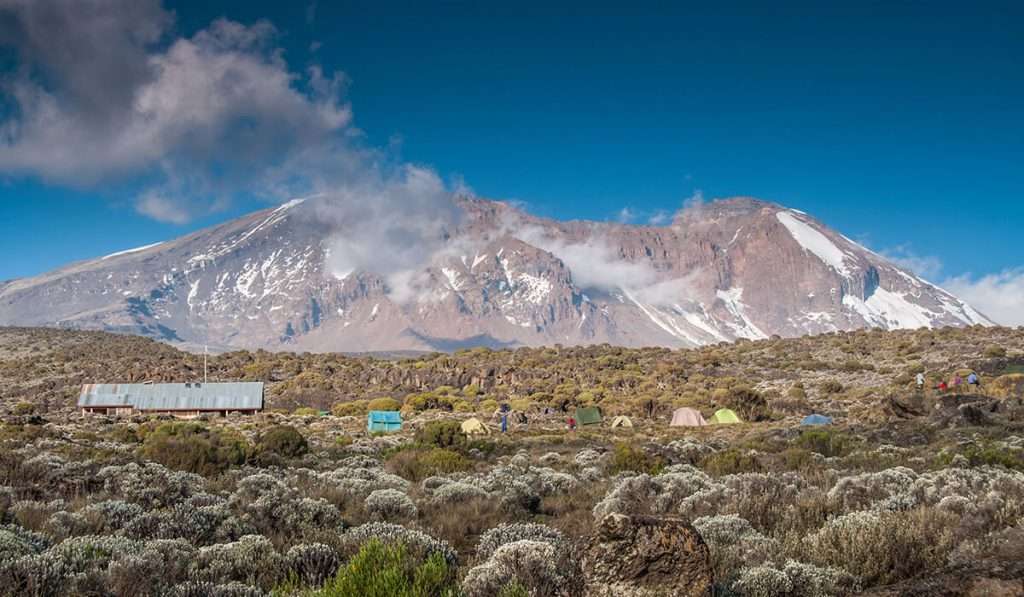
Due to its proximity to Kenya’s Amboseli National Park, the Shira Plateau is famous for its fauna landscapes. The plateau extends for around 13 km west of Kibo summit, a caldera—a collapsed volcanic crater—making it a great spot to take some of the best photographs of Mount Kilimanjaro.
It is 3,800 meters (12,500 feet) high. The Shira Plateau is filled with the remains of three volcanoes—Mawenzi, Shira, and Kibo—that erupted over 750,000 years ago. Trekkers on the Shira, Lemosho, and Northern Circuit routes will first see Mount Kilimanjaro from the Shira Plateau.
Best photographs spot: The Barranco wall
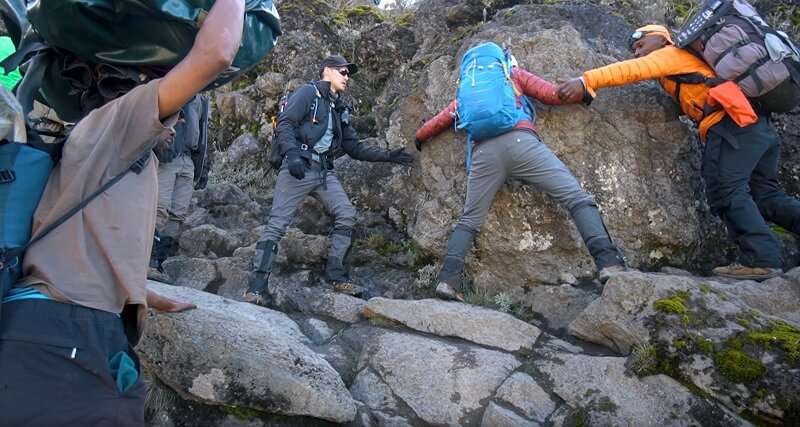
The Barranco Wall is one of the most iconic locations on Mount Kilimanjaro. It’s a steep ridge nearly halfway up the mountain at the southern base of Kibo.
Furthermore, the Barranco Wall offers some fitting challenges that most adventurous climbers want to experience. It was formed during the collapse of the Kibo’s crater rim part.
From the Barranco Valley, this structure is massive (843 feet) and intimidating to look at. However, it’s easier and safer to navigate than you may expect. As you climb closer, you’ll see a stair-like trail zig-zagging up the steep Barranco Wall.
Even if you’re not exceptionally fit, you can successfully climb the Barranco Wall at a slow and steady pace. The hardship and challenges will all be worth it once you reach the top and see the majestic view.
The trekkers from the Machame, Shira, Lemosho and Umbwe routes will mount the Barranco Wall. This part of Mount Kilimanjaro is known to be dangerous, so it requires extra focus and persistence.
Best photographs spot: The Lava tower

The Lava Tower is a tower-like structure formed from the lava that erupted from Kilimanjaro while still an active volcano. It’s a 300-foot-tall lava formation that burst out from a vent, cooled, hardened, and plugged up the vent beneath.
The tower, known as the Shark’s Tooth, lives in the high-altitude desert. There is no vegetation in the area, only a pool of rocks, scree, and specks of dust.
Today, the Lava Tower is a massive, visible landmark on Kilimanjaro’s trail. Climbing to the top of the tower was previously permitted until the park authorities considered it too risky.
Trekkers on the Shira, Lemosho, Machame and Northern Circuit routes will have the opportunity to pass and take breathtaking pictures of the Lava Tower.
Best photographs spot: The saddle

The Saddle is a barren, plain, alpine desert between Kibo and Mawenzi. The Saddle area is approximately 14 square miles, making it Africa’s most enormous high-altitude tundra. Trekkers on the Marangu and Rongai routes will traverse the Saddle on their way to the summit.
Best photographs spot: The Mawenzi peak

The Mawenzi Peak is one of the three peaks on Kilimanjaro. This is the second-highest peak, with an altitude of 16,893 feet, comprised of loose rocks and very steep terrains.
The peak has been closed due to past fatalities. However, it was recently re-opened ONLY for technical climbers willing to face possible accidents.
Mawenzi can be observed on all the routes of Kilimanjaro.
Best photographs spot: Crater camp
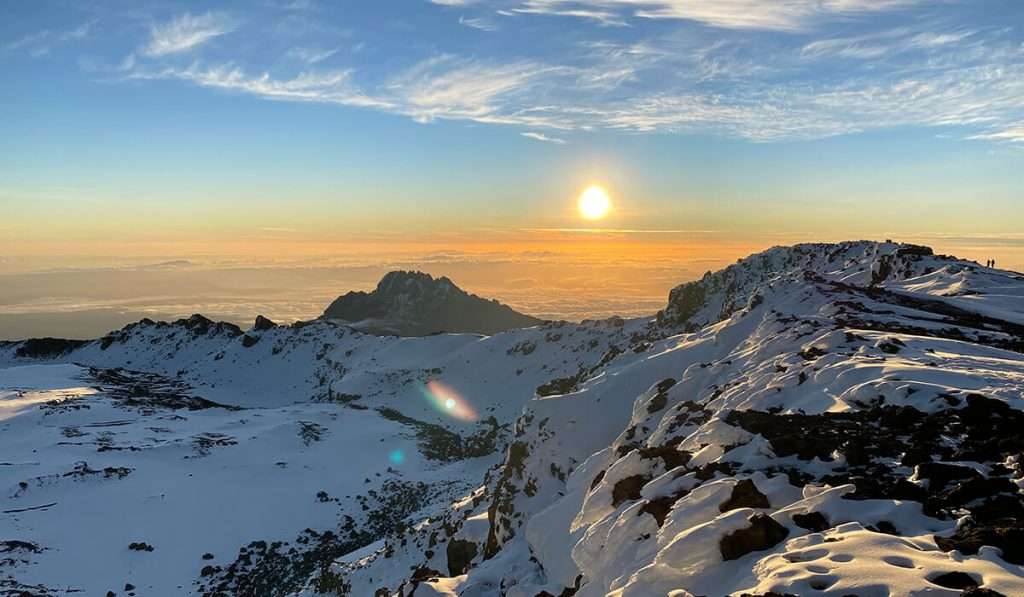
The Crater Camp is located near the summit at 18,865—the highest campsite on Kilimanjaro. For those who can stand physical discomfort, you can add a day here to explore the Furtwangler Glacier—the last surviving glacier of Kilimanjaro.
This area is the closest you’ll ever get to stepping onto the moon. The summit’s floor is covered in raw volcanic rock lumps and deep ash sands.
Best photographs spot: The Southern Ice Field

Kilimanjaro is famous for its peak, crowned with ice, despite its proximity to the equator. All the routes on Kilimanjaro traverse the Southern Ice Field, where you will witness its awe-inspiring beauty and shoot the best photographs on Kilimanjaro.
However, due to global warming, the ice is quickly thinning, so it would be a good idea to visit and snap while it isn’t completely gone.
Best photographs spot: The Uhuru peak

The Reusch Crater is located on Kibo, the highest cone in Kilimanjaro. It contains the innermost crater, known as the Ash Pit.
This volcano remains dormant and could erupt again. The Reusch Crater is an hour’s hike from the Crater Camp.
Best photographs spot: The Reusch crater

The Reusch Crater is located on Kibo—the highest cone in Kilimanjaro. It contains the innermost crater, known as the Ash Pit.
This volcano remains dormant and could have the possibility of erupting again. The Reusch Crater is an hour hike from the Crater Camp.
Photographic tips

Kilimanjaro’s beauty is worth over a thousand words, making describing it almost impossible.
Its beautiful and majestic statures are awe-inspiring, and you’ll encounter five ecological zones with different climates.
But how do you take picture-perfect shots at these places? Before we get into that, make sure to bring:
– Extra batteries and SD card
– Thin gloves for taking a picture
– Small camera bag
– Cap string of lens
– Tripod for a more stable shot (optional)
When you stumble upon the perfect scene in Kilimanjaro, it’s easy to pull out your camera and snap some pictures to capture the beauty of the place. However, if you want to take a breathtaking landscape photo, you must be methodical.
Thus, we’ve compiled photography tips that you can use on your Kilimanjaro adventure.
1. Wait for the right light
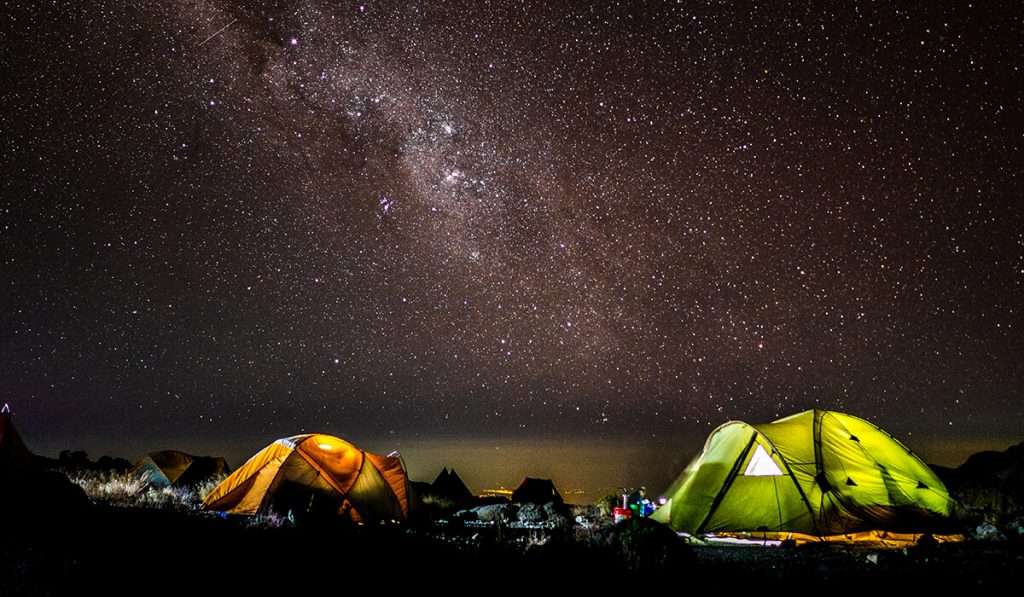
Waiting for the right light will help you capture a good picture. For example, a bright day will create many scenic contrasts, including dark shadows and colourful contrasts.
Meanwhile, taking pictures early in the morning and late afternoon will give you less contrast and a beautiful warm glow. If the weather is mainly cloudy, you don’t need to wait for the right light since the clouds will help filter out the sunlight for a soft, even picture.
2. Use a tripod
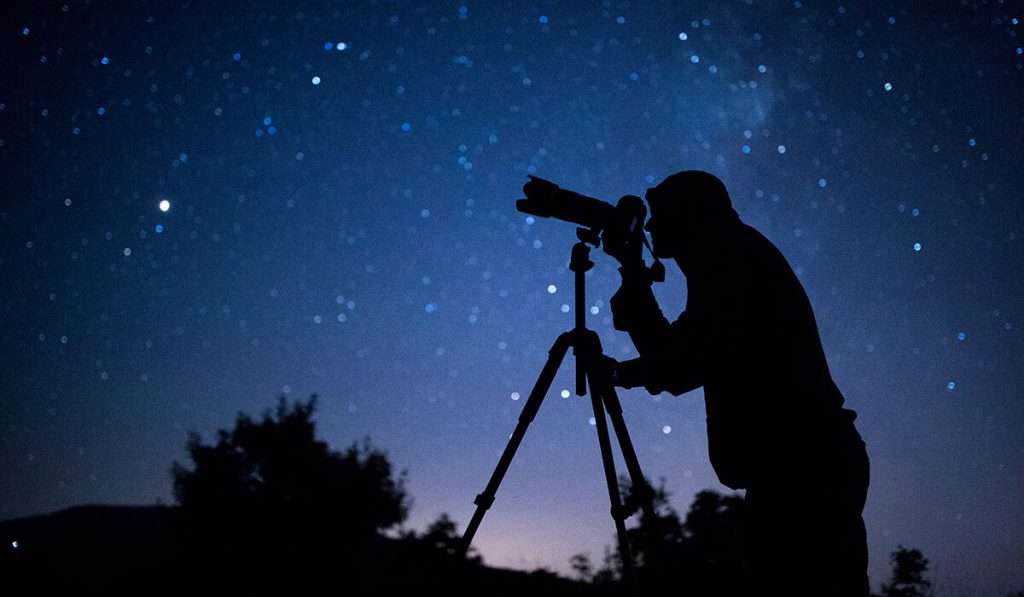
Using a tripod helps you get sharp shots. It eliminates the camera shake that will likely happen often in a handheld shot while on the mountain. You can get much longer and faster shutter speeds, resulting in amazing Kilimanjaro landscape shots.
3. Place the horizon strategically

Many beginners point to the scene that attracts them and take a snap. Although there’s nothing wrong with that, you won’t get the best possible picture if you don’t strategically place your horizon.
Thus, instead of shooting carelessly, put the horizon in the frame. In taking a Kilimanjaro landscape picture, put the horizon on the upper third quadrant. However, if you’re taking photos of the sky, set the horizon to the lower third quadrant to include more of the sky in your shot.
4. Add a filter

Adding a filter will help your photos. However, make sure to do everything correctly. You can add a lens filter to enhance your landscape photography shots.
Lens filters are inexpensive camera accessories that can help you achieve exceptional shots. For example, a polarizing filter can help you control how blue the sky appears in your photos.
Meanwhile, a graduated density filter will restrict you from overexposing the sky. This keeps all the details intact, giving you a beautiful shot.
5. 1/3 Way up the frame focus

Getting sharp shots matters a lot when taking landscape pictures. However, there are issues of focus, too. Thus, it’s essential to use single-point auto-focus or manual focus and set the shot’s focus to 1/3 of the way up the frame.
Takeaway
Climbing Kilimanjaro is an unforgettable experience. It’ll challenge you to push your limits and experience the beautiful views of the tallest mountain in Africa, something you will dream about for the rest of your life.
Many trekkers consider this Kili adventure a spiritual journey due to its remote location and feeling alone with nature and the universe.
If you would like more advice on photography for Kilimanjaro or any other safaris in Tanzania, contact our team of professional Kilimanjaro and Safari Specialists today.
Conclusion
With its vibrant Maasai culture, majestic Mount Kilimanjaro, the incredible Serengeti National Park, lush coffee plantations, and an array of adventure sports, West Kilimanjaro is an unparalleled destination for travelers in 2023/2024.
Whether seeking awe-inspiring natural landscapes, thrilling outdoor activities, or immersing yourself in vibrant local cultures, West Kilimanjaro offers an enriching and unforgettable experience. Start planning your journey to this remarkable destination and prepare to be captivated by the wonders that await you in West Kilimanjaro.
Frequently Asked Questions (FAQs)
1. What are the best spots on Mount Kilimanjaro for capturing breathtaking photographs?
Among the prime photography locations on Mount Kilimanjaro are Stella Point and Uhuru Peak, renowned for their panoramic vistas and sunrise spectacles; Barranco Wall, distinguished by its striking rock formations; and Shira Plateau, offering breathtaking views of the mountain and its glaciers. The ascent of Kilimanjaro traverses various ecological zones, presenting abundant chances to photograph a wide array of landscapes and wildlife.
2. How can I capture the beauty of Mount Kilimanjaro in my photographs?
To photograph Mount Kilimanjaro’s splendour, use a wide-angle lens to encompass its vast landscape and striking skies. Explore diverse angles, from low perspectives to accentuate its towering stature to close-up shots showcasing intricate details like glaciers and vegetation. Climbing Kilimanjaro unfolds a visual odyssey across varied terrains, spanning lush rainforests to stark alpine deserts, offering boundless chances for breathtaking vistas.
3. What time of day is best for taking photographs on Mount Kilimanjaro?
The early morning and late afternoon are generally the best times for photography on Mount Kilimanjaro. During these times, the light is softer, creating a warm and golden glow that enhances the beauty of the landscape.
Additionally, sunrise and sunset offer spectacular colours and dramatic lighting effects. Climbing Kilimanjaro allows you to witness breathtaking views from the highest point in Africa, Africa’s highest peak, offering unparalleled opportunities for capturing stunning images.
4. What should I consider when composing my photographs on Mount Kilimanjaro?
When composing your photographs on Mount Kilimanjaro, consider elements such as leading lines, framing, and symmetry to create visually appealing images. Experiment with different compositions and perspectives to convey the grandeur and scale of the mountain.
Incorporate foreground elements, such as rocks or vegetation, to add depth and interest to your shots. Climbing Kilimanjaro presents a unique opportunity to document your journey up the tallest free-standing mountain in the world, providing a visual narrative of your ascent.
5. Can I hire a local guide or porter to assist me with photography on Mount Kilimanjaro?
You can hire local guides and porters to assist you with photography on Mount Kilimanjaro. They can help carry your equipment, navigate the terrain, and provide valuable insights into the best photo opportunities.
Communicate your specific photography needs and preferences to ensure a successful experience. Climbing Kilimanjaro with the assistance of experienced guides and porters ensures safety and allows you to focus on capturing memorable moments along the way.
6. How challenging is it to capture images on Mount Kilimanjaro while climbing?
Capturing images of Mount Kilimanjaro while climbing can be challenging due to altitude, weather conditions, and physical exertion. Climbers must balance their photography efforts with the demands of the climb, ensuring safety and acclimatization.
7. What camera equipment should I bring to photograph Mount Kilimanjaro?
When photographing Mount Kilimanjaro, bringing a camera with manual settings is essential to adjust for different lighting conditions and landscapes. Consider getting a sturdy DSLR or mirrorless camera with interchangeable lenses and a tripod for stability in low-light situations. Pack extra memory cards and batteries to make sure you get all the snaps.
8. Are there any restrictions on photography or filming on Mount Kilimanjaro?
While there are no specific restrictions on photography or filming on Mount Kilimanjaro, climbers should be mindful of environmental conservation and respect the local culture. Avoid disturbing wildlife or damaging vegetation while capturing images, and always ask for permission before photographing local people or communities.
9. What are some safety tips for photographing on Mount Kilimanjaro?
Safety should always be a priority when photographing on Mount Kilimanjaro. Stay hydrated and well-rested to maintain focus and avoid accidents. Be mindful of your surroundings and look for hazards like loose rocks or steep drops. Additionally, protect your equipment from extreme temperatures and moisture by using weatherproof camera gear and carrying it in a protective case.
10. How can I capture the unique features of Mount Kilimanjaro, such as its glaciers and crater?
Emphasize composition and lighting to capture Mount Kilimanjaro’s distinctive attributes:
It emphasizes its glaciers and craters.
Try extended exposure techniques to depict cloud movements around the peak, or utilize a telephoto lens for close-ups of ice and rock formations.
Enhance your shots with scale elements, like climbers or wildlife, to convey the mountain’s magnificence.
11. What are some post-processing techniques for enhancing photographs of Mount Kilimanjaro?
In post-processing, you can enhance photographs of Mount Kilimanjaro by adjusting exposure, contrast, and saturation to reveal the landscape’s details. Consider using HDR (High Dynamic Range) techniques to blend multiple exposures and capture a scene’s full range of light. Additionally, experiment with creative editing techniques such as black-and-white conversion or selective colour adjustments to add drama and impact to your images.
12. How can I ensure my photographs of Mount Kilimanjaro are environmentally friendly?
To ensure your photographs of Mount Kilimanjaro are environmentally friendly, follow Leave No Trace principles and minimize your impact on the natural landscape. Avoid trampling vegetation or disturbing wildlife while composing your shots, and refrain from leaving any litter or waste behind. Additionally, consider using eco-friendly camera accessories and supporting local conservation efforts to keep the beauty of the mountain for future generations.
13. What are some alternative viewpoints for photographing Mount Kilimanjaro?
In addition to traditional viewpoints, consider exploring alternative vantage points for photographing Mount Kilimanjaro, such as nearby hills or ridges, to capture unique perspectives of the mountain. Experiment with different angles and elevations to showcase the mountain’s distinctive features and surrounding landscape.
14. Can I use drones for aerial photography on Mount Kilimanjaro?
Drone use on Mount Kilimanjaro is subject to regulations and permits from the Tanzanian government. Before flying a drone on the mountain, obtain the necessary permits and adhere to local aviation laws and guidelines. Additionally, be mindful of the possible impact on wildlife and other climbers and operate your drone responsibly.
15. What are some lesser-known photography spots on Mount Kilimanjaro?
While popular viewpoints such as Uhuru Peak and Barranco Wall offer stunning vistas, there are also lesser-known photography spots on Mount Kilimanjaro waiting to be discovered. Explore off-the-beaten-path trails and hidden valleys to find unique perspectives and capture the mountain’s beauty from new angles. Look for hidden waterfalls, alpine lakes, and rock formations that offer picturesque photo opportunities.